Table of Contents
- Introduction
- Custom vs Made to Fit vs Universal Holsters
- How a Custom Leather Holster Is Made?
- Why Molded Fit Matters in a Custom Leather Holster?
- Custom Leather Holsters for Long-Barrel Revolvers
- When a Custom Leather Holster Is Not Necessary
- How Long a Custom Leather Holster Lasts?
- What to Specify When Ordering a Custom Holster?
- Custom Leather Holsters FAQ
- Conclusion
A custom leather holster is a holster made around the dimensions of a specific firearm configuration rather than designed to accept a broad range of similarly sized guns.
In most of the holster market, "custom" means made to fit a particular gun model rather than individually bespoke to one person's body. Model-specific custom holsters can also account for details such as barrel length, optics, lights and carry position when those options are supported.
For users asking what a custom leather holster is, it is primarily a firearm-specific holster whose shape and retention are built around a defined gun configuration.
In practical terms, a custom holster is most useful when precise firearm fit matters more than the flexibility of a universal design.
What a Custom Leather Holster Is?
A custom leather holster is a molded leather holster shaped to fit a specific handgun model and configuration.
The leather is formed around the contours that matter for fit and retention, including areas around the slide or frame, trigger guard and other external features. The exact construction varies by manufacturer and holster style.
For users asking whether custom means completely handmade for one individual, it usually does not because many custom made holsters are produced from established patterns for specific gun models.
In practical terms, "custom" most often means gun-specific and made to fit rather than fully bespoke to the owner's body.
Custom vs Made to Fit vs Universal Holsters
Custom, made-to-fit and universal holsters describe different approaches to firearm fit, although the terms are often used interchangeably in marketing.
A made-to-fit holster is designed for a defined firearm model, a universal holster uses a broader shape to accommodate several guns, and a genuinely bespoke custom holster may involve individual specifications beyond the firearm model.
For users asking what the difference is between custom and made-to-fit holsters, most commercial "custom holsters" are actually model-specific made-to-fit products rather than one-off holsters individually patterned for each customer.
In practical terms, the important question is not the label but how precisely the holster matches the actual handgun.
| Holster type | How fit is achieved | Retention | Gun models covered | Typical use |
|---|---|---|---|---|
| Made to fit | Molded or shaped for a specific gun model | Model-specific fit, sometimes with additional retention | One model or closely defined configuration | Everyday carry, concealed carry, model-specific use |
| Bespoke custom | Built around individual firearm and requested specifications | Designed around the specified setup | Usually one exact configuration | Unusual firearms or specialized requirements |
| Universal | Flexible or broadly shaped construction | General pressure, straps or adjustable systems | Multiple similarly sized firearms | Occasional use, range transport or broad compatibility |
How a Custom Leather Holster Is Made?
A custom leather holster is generally produced by selecting suitable leather, cutting the holster pattern, molding it around the firearm profile, stitching the structure and finishing the edges and surfaces.
The exact sequence differs between makers and holster styles, but fit is created through the combination of pattern geometry, leather forming and construction.
For users asking how handmade leather holsters are made, the defining step is that the finished holster is shaped around a known firearm configuration instead of remaining a loose generic pouch.
In practical terms, construction quality depends on material selection, molding, reinforcement, stitching and finishing working together.
Leather Selection and Thickness for Custom Holsters
Leather for a structured holster must provide enough body to support the firearm while still allowing accurate shaping and comfortable carry.
Different parts of a design may require different levels of stiffness, and the appropriate leather specification depends on holster style, firearm size and reinforcement.
For users asking what leather is used for custom gun holsters, quality leather holsters generally rely on leather selected specifically for structured holster construction rather than soft garment leather.
In practical terms, leather quality and structure matter more than simply describing a holster as genuine leather.
Wet Molding a Leather Holster to the Gun Model
Wet molding shapes leather around the external profile of a specific firearm so the holster follows important contours after drying.
The process creates a closer firearm-specific fit than an unmolded universal pouch while still allowing the material to break in gradually during use.
For users asking why leather holsters are molded, molding helps establish retention, positioning and consistent placement of the handgun inside the holster.
In practical terms, wet molding is one of the main differences between a model-specific molded leather holster and a loose universal leather design.
Stitching and Reinforcement in Custom Leather Holsters
Stitching and reinforcement hold the molded leather structure together and help maintain the intended shape under regular use.
Areas around the holster mouth, attachment points and other load-bearing sections may require additional structural support depending on the design.
For users asking whether stitching affects leather holster quality, it does because stitching placement and reinforcement contribute directly to structural stability.
In practical terms, molding creates the shape while stitching and reinforcement help preserve it.
Finishing and Break-In of a Custom Leather Holster
A new leather holster may require a short settling or break-in period because freshly molded leather can initially fit the firearm tightly.
Edges and surfaces are finished to reduce unnecessary roughness, while normal use allows the molded leather to adapt slightly without becoming a loose universal fit.
For users asking how long Craft Holsters production typically takes, [CRAFT TO CONFIRM: typical production time].
In practical terms, production and break-in are separate stages, and a correctly fitted leather holster should not be deliberately overstretched.
Why Molded Fit Matters in a Custom Leather Holster?
Molded fit matters because it helps position the firearm consistently, cover the trigger guard and provide predictable retention.
A properly designed model-specific holster can use shaped contact around the firearm for retention without relying entirely on a loose strap. Some leather designs also use reinforcement to help the holster mouth retain useful structure after the handgun is removed.
For users asking why a made-to-fit holster is safer and more functional than a loose universal pouch, the main advantage is predictable firearm positioning and trigger guard coverage rather than the word "custom" itself.
In practical terms, accurate fit improves retention, draw consistency and the ability of the holster to perform as designed.
When You Need a Custom Leather Holster
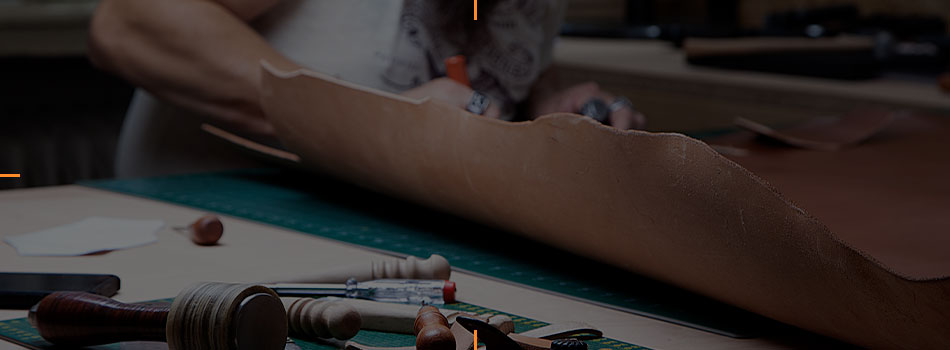
A custom leather holster becomes most useful when the firearm or carry requirement falls outside what a generic holster can accommodate reliably.
Uncommon guns, accessories, long barrels and specialized carry positions create fit requirements that broad universal designs may not handle well.
For users asking when custom holsters are worth it, they are most valuable when the exact firearm configuration materially changes holster fit.
In practical terms, the following cases are where made-to-fit construction provides the clearest benefit.
Custom Leather Holsters for Uncommon or Discontinued Guns
An uncommon or discontinued handgun may require a made-to-fit holster because generic manufacturers often concentrate on current high-volume models.
Older or less common external dimensions can make broad size-based compatibility unreliable.
For users asking whether a custom holster is useful for a discontinued pistol, it can be particularly valuable when no well-fitted standard option exists.
In practical terms, uncommon firearms are one of the strongest cases for model-specific holster production.
Custom Holsters for Pistols With a Red Dot
A pistol with a mounted optic may need a holster with additional clearance around the rear and top of the slide.
The optic can interfere with a standard holster even when the underlying pistol model fits correctly.
For users asking whether a custom holster can accommodate a red dot, purpose-built red dot holsters can provide the required optic clearance when the configuration is supported.
In practical terms, the optic should be specified together with the firearm rather than added after holster fit is assumed.
Custom Holsters for Pistols With a Weapon Light
A mounted weapon light can substantially change the external shape that the holster must accommodate.
Light-bearing designs often require a holster built around the combined handgun and light configuration rather than the pistol alone.
For users asking whether a weapon light requires a different holster, dedicated light-bearing holsters are usually required when the light enters the holster body.
In practical terms, both handgun and mounted light must be specified before compatibility is assumed.
Custom Leather Holsters for Long-Barrel Revolvers
Long-barrel revolvers benefit from model-specific holsters because barrel length, cylinder size and overall balance affect both fit and carry position.
A generic revolver pouch may provide insufficient barrel support or position a large revolver poorly on the body.
For users asking whether long-barrel revolvers need custom holsters, model-specific revolver holsters become increasingly useful as firearm length and frame size increase.
In practical terms, both revolver model and exact barrel length should be specified.
Custom Leather Holsters for Vintage Firearms
Vintage firearms often benefit from made-to-fit holsters because older versions may differ from current models carrying the same or similar names.
Generation differences, barrel configurations and external controls can all affect holster fit.
For users asking whether a modern holster automatically fits an older version of the same gun, it should not be assumed unless the manufacturer confirms compatibility.
In practical terms, vintage firearm identification should include generation or production variant where relevant.
Custom Holsters for Specific Carry Positions
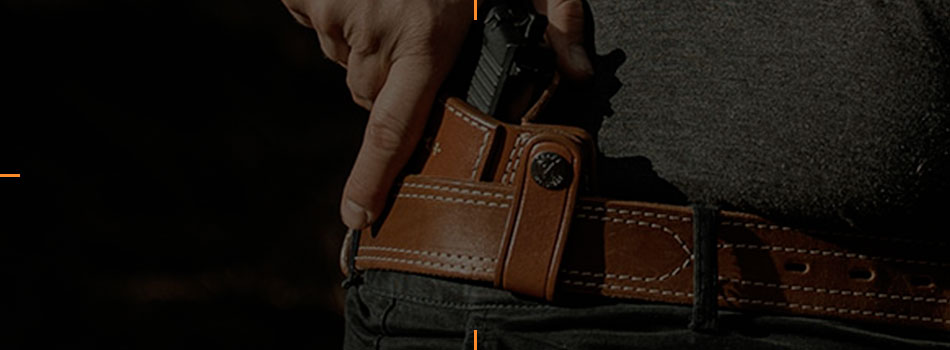
A made-to-fit holster can be useful when the preferred carry position requires geometry that universal holsters do not provide well.
IWB holsters, OWB holsters and shoulder holsters position the same firearm differently and therefore require different structures.
For users asking whether one custom holster can serve every carry position, it generally cannot because attachment, ride height and orientation are part of the holster design.
In practical terms, carry position should be specified before the holster is selected.
Custom Holsters for Body and Wardrobe Constraints
A custom holster can help when a particular carry position, firearm size or attachment style must work with specific clothing requirements.
Made-to-fit firearm geometry does not automatically solve every body-type issue, but choosing the correct ride, cant and attachment system can improve compatibility with a wardrobe.
For users asking whether a custom gun holster is individually fitted to body shape, most model-specific custom holsters are not bespoke body fittings.
In practical terms, firearm fit and body fit should be treated as related but separate decisions.
When a Custom Leather Holster Is Not Necessary
A custom leather holster is not necessary when a well-designed standard holster already fits the firearm and intended use correctly.
Common handgun models often have strong off-the-shelf options, and occasional range use may not justify paying for specialized construction. A custom order also makes little sense for a firearm that will soon be replaced.
For users asking whether custom holsters are always worth it, the answer is no because a well-made standard or universal holster can be the better purchase when its fit and intended use are appropriate.
In practical terms, a good universal holster is preferable to a poorly fitting cheap product marketed as custom.
Custom Leather Holsters vs Off the Shelf Kydex
Custom leather and off-the-shelf Kydex holsters can both provide secure model-specific carry when correctly designed for the firearm.
Leather gradually conforms to the body and may require break-in and occasional care, while Kydex holsters maintain a rigid shape and generally make one-handed re-holstering simpler.
For users asking whether custom leather is better than Kydex, neither material is universally superior because carry position, climate, comfort and maintenance priorities differ.
In practical terms, precise firearm fit matters more than whether the shell is leather or thermoplastic.
How Long a Custom Leather Holster Lasts
A well-kept custom leather holster can remain functional for years, but its service life depends on use, moisture exposure, storage and maintenance.
Sweat, repeated soaking, excessive conditioning, high heat and long-term compression can accelerate softening or distortion. Leather should be kept reasonably clean and allowed to dry naturally after moisture exposure.
For users asking how long a handmade leather holster lasts, no universal lifespan applies because wear conditions differ substantially between owners and carry styles.
In practical terms, regular inspection and moderate leather care are more useful than relying on a fixed durability number.
What to Specify When Ordering a Custom Holster
A custom holster order should identify the exact firearm and every accessory or carry detail that changes physical fit.
The most common ordering errors occur when a handgun family is named without the generation, barrel length or mounted accessories that distinguish one configuration from another.
For users asking how to measure or specify a custom holster, the required information is usually firearm configuration and carry preferences rather than taking manual measurements of the gun.
In practical terms, the following checklist should be completed before ordering.
- Exact gun model and generation: Identify the full model and relevant generation or variant.
- Barrel length: Specify the correct barrel length, especially for revolvers and pistols offered in several sizes.
- Mounted optic: Identify whether the handgun carries a red dot or other slide-mounted optic.
- Mounted weapon light or laser: Specify the exact accessory configuration required by the holster maker.
- Carry position: Choose IWB, OWB, shoulder or another supported carry method.
- Dominant hand: Specify right-handed or left-handed carry.
- Belt width: Confirm that the holster attachment matches the intended belt.
- Sight height: Note suppressor-height or other unusually tall sights when they may affect clearance.
- Maker compatibility: Check the manufacturer's stated compatibility before assuming that a similar firearm or accessory combination fits.
Custom Leather Holsters FAQ
A custom leather holster is shaped for a specific handgun configuration rather than a broad range of similarly sized firearms. In most commercial use, custom means made to fit a gun model rather than individually bespoke to one person.
Custom holsters are worth considering when firearm dimensions, accessories or carry requirements make generic fit unreliable. They may not be necessary when a well-made standard holster already fits the gun and intended use correctly.
A made-to-fit holster is designed around a defined firearm model, while truly bespoke custom work can include additional individual specifications. In everyday holster terminology, the words custom and made to fit are often used for the same model-specific products.
Many molded leather holsters require some break-in because freshly formed leather can initially hold the firearm tightly. Break-in should allow normal settling without deliberately overstretching the holster.
A holster can be designed with additional clearance for a slide-mounted red dot. Compatibility should be confirmed for the actual handgun and optic configuration rather than assumed from the gun model alone.
Most model-specific holsters require the exact firearm model, generation and configuration rather than manual measurements taken by the customer. Barrel length, accessories, carry position and belt requirements should also be specified where relevant.
A model-specific leather holster provides more predictable firearm fit than a broad universal design when both are well made. A quality universal holster can still be the better choice when exact molding is unnecessary for the intended use.
A leather holster should be kept clean, allowed to dry naturally after moisture exposure and treated only with appropriate leather-care products when necessary. Excessive water, heat or conditioning can soften the leather and alter its fit.
Conclusion: Custom Leather Holsters Explained
A custom leather holster is most accurately understood as a firearm-specific made-to-fit holster rather than automatically as a fully bespoke product.
Its main value is precise fit for configurations that universal holsters cannot accommodate consistently, including uncommon guns, optics, weapon lights, long barrels and specialized carry positions.
For users asking whether a custom leather holster is worth buying, the answer depends on whether model-specific fit solves a real compatibility or carry problem.
In practical terms, custom leather holsters make the most sense when the exact firearm configuration matters and a suitable standard option does not already solve the same problem.