


Table of Contents
- Introduction
- Taurus GX2 Overview
- Taurus G3c Overview
- Taurus GX2 vs G3c: Size and Dimensions
- Magazine Capacity and Firepower
- Ergonomics and Grip Design
- Trigger Performance and Shooting Experience
- Build Quality and Reliability
- Optics, Sights, and Customization
- Concealed Carry and Holster Compatibility
- Potential Drawbacks
- Taurus GX2 vs G3c: Why Were They Made?
- Conclusion
When comparing the Taurus GX2 vs G3c, you’re looking at two compact 9mm pistols built around the same core idea: affordable, practical concealed carry. These aren’t range toys designed to impress with premium finishes or match-grade triggers. They’re defensive tools meant to be carried daily, shot regularly, and trusted when it matters.
Taurus has spent the past several years rebuilding its reputation in the striker-fired market, and both the GX2 and G3c reflect that effort. On paper, the differences between them may seem minor. In the hand and on the range, however, those small differences can change how the pistol feels, carries, and performs. That’s what this comparison is about.
Taurus GX2 Overview
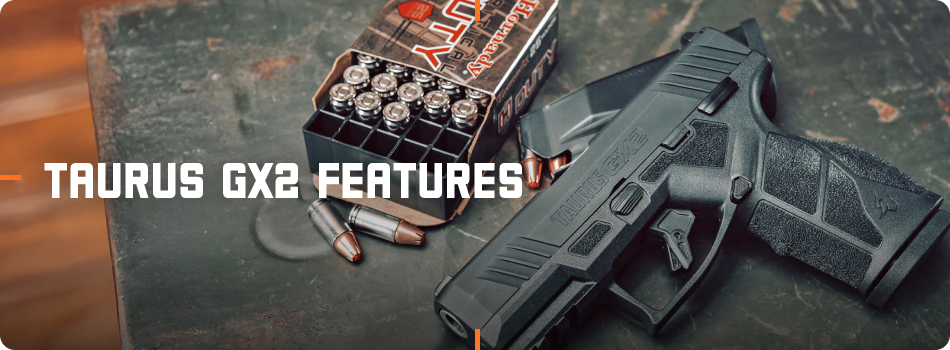
The Taurus GX2 is built around a simple but deliberate concept: give the concealed carrier a compact 9mm that does exactly what it needs to do, without inflating the price or adding unnecessary complexity. It sits firmly in the defensive carry category, designed for daily use rather than range prestige. The GX2 is not trying to compete with premium-tier pistols. It is trying to be dependable, accessible, and easy to live with.
In the hand, the GX2 feels purpose-driven. The grip angle is natural, and the frame does not feel oversized despite offering double-stack capacity. The texture strikes a middle ground. It provides enough traction to maintain control during recoil, but it does not feel abrasive when worn against the body for extended periods. That balance becomes important for those who carry inside the waistband every day.
The slide profile is clean and functional. Serrations are easy to grab without being overly sharp. Controls are laid out in a familiar pattern, which makes transitioning from other striker-fired platforms straightforward. For newer shooters, this reduces the learning curve. For experienced carriers, it avoids the need to adapt to unusual control placement.
Weight is one of the GX2’s strongest practical advantages. A few ounces may not seem like much on paper, but when a pistol is carried for ten or more hours, the difference becomes noticeable. The GX2 tends to feel less demanding on the belt line and less intrusive during daily movement. That characteristic alone can make it more appealing for those who prioritize comfort over marginal recoil softness.
From a market perspective, the GX2 fills the role of an entry-friendly defensive handgun. It appeals to first-time buyers, budget-conscious carriers, and anyone looking for a reliable compact 9mm without stepping into higher price brackets. Its design is focused, restrained, and practical, which is often exactly what concealed carry demands.
Taurus G3c Overview
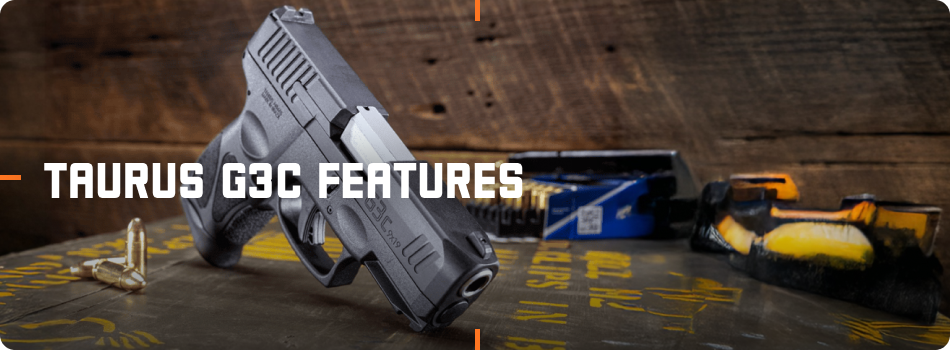
The Taurus G3c represents a refinement of Taurus’ G-series concept in a compact format. It builds on the foundation of the larger G3 platform and condenses it into a carry-friendly size without sacrificing the overall shooting feel. The result is a pistol that feels slightly more substantial in the hand than some ultra-light compacts.
When you grip the G3c, the difference in texture and frame contour is immediately noticeable. The grip pattern is more assertive, providing solid traction during live fire. This added texture can inspire confidence when running defensive drills or shooting rapid strings. It anchors the pistol more firmly in the hand, particularly when palms begin to sweat under extended practice.
The G3c also carries a bit more weight than the GX2. That additional mass works in its favor during recoil management. It does not transform the pistol into a soft-shooting range gun, but it does smooth out the impulse slightly. For shooters who practice regularly, this can make extended sessions more comfortable and controlled.
Slide manipulation is straightforward, with well-defined serrations that provide a secure grip. The trigger system is consistent and predictable, offering a defined reset suitable for defensive shooting. While it remains a duty-oriented trigger rather than a competition unit, many users consider it one of the more polished triggers in Taurus’ compact lineup.
Another important factor is market history. The G3c has been available long enough to establish a broader reliability track record. That extended presence means more documented user experiences and more real-world testing. For some buyers, that history offers reassurance.
Positioned within the compact concealed carry category, the G3c appeals to shooters who want a slightly more planted feel without stepping into full-size dimensions. It balances concealability with shootability in a way that feels deliberate rather than stripped down. For many carriers, that balance is what makes the G3c stand out within the Taurus lineup.
Taurus GX2 vs G3c: Size and Dimensions
On paper, the Taurus GX2 vs G3c size comparison looks almost interchangeable. Both pistols fall squarely into the compact 9mm category, with barrel lengths hovering around the 3.2-inch mark and overall lengths just over six inches. Width is comparable as well, typically around the 1.2-inch range depending on controls and slide geometry.
Where the measurable difference appears is weight. The GX2 generally comes in lighter than the G3c by a few ounces. That difference does not radically alter performance, but it becomes relevant in concealed carry contexts. Lighter pistols tend to shift less in lightweight clothing and are less fatiguing over long hours of carry. For appendix carry in particular, those ounces can influence daily comfort more than raw dimensions.
The G3c, while only slightly heavier, feels denser in hand. That added mass contributes to stability during firing. It also provides a more planted sensation when drawing from a structured holster. From a pure concealment standpoint, both pistols are comparable. The real distinction is how they balance between carry comfort and recoil management.
For concealed carriers evaluating footprint alone, either model will fit into standard compact-size holster categories. The decision is less about dimensions and more about how those dimensions translate into real-world wear and shooting behavior.
| Specification | Taurus GX2 | Taurus G3c |
|---|---|---|
| Caliber | 9mm Luger | 9mm Luger |
| Action | Striker-fired, recoil-operated, semi-automatic | Striker-fired, recoil-operated, semi-automatic |
| Barrel Length | 3.38 inches | 3.20 inches |
| Overall Length | 6.19 inches | 6.30 inches |
| Overall Height | 4.89 inches | 5.10 inches |
| Overall Width | 1.18 inches | 1.20 inches |
| Weight (Unloaded) | 19.04 oz | 22 oz |
| Magazine Type | Double-stack detachable box | Double-stack detachable box |
| Standard Capacity | 13+1 | 12+1 (10+1 compliant versions available) |
| Sights | White-dot front, drift-adjustable rear | White-dot front, drift-adjustable rear |
| Frame Material | Polymer | Polymer |
| Slide Material | Alloy steel | Alloy steel (Tenifer finish on select models) |
| Safeties | Manual thumb safety (variant dependent), internal safeties | Manual thumb safety (variant dependent), internal safeties, restrike capability |
| MSRP (Typical) | Approx. $310 | Approx. $306 |
Magazine Capacity and Firepower
Capacity is one of the few spec-sheet differences that appears clearly in the Taurus GX2 vs G3c comparison. The GX2 typically offers a 13+1 capacity in a compact frame. The G3c generally ships with 12-round magazines, often including multiple magazines in the box depending on the configuration.
From a defensive standpoint, the difference of one round is statistically insignificant. What matters more is grip profile and magazine geometry. Double-stack compact magazines require careful balancing of width, feed reliability, and ergonomics. Both pistols are built around that principle.
The GX2 manages to maintain a relatively slim grip profile while accommodating its capacity. The G3c’s magazine design, combined with its grip texturing and contouring, may feel more secure during rapid firing sequences. For shooters prioritizing control under recoil, grip security can outweigh raw round count.
It is also worth noting that magazine cost and availability can influence long-term ownership. The G3c’s longer market presence has resulted in broader aftermarket familiarity. However, both platforms are designed as practical defensive tools rather than high-volume competition systems.
In short, both pistols provide adequate capacity for concealed carry. The decision should be guided by grip feel and shooting control rather than a single-round numerical advantage.
Ergonomics and Grip Design
Ergonomics are where subjective preference becomes decisive.
The GX2’s grip texture is moderate. It is designed to provide functional traction without becoming abrasive during daily concealed carry. For those who carry directly against the body or in lighter clothing, that restraint can be beneficial. The grip shape itself is straightforward, avoiding aggressive finger grooves or exaggerated contours.
The G3c takes a different approach. Its grip texture is more pronounced and offers stronger mechanical engagement with the hand. During defensive drills or controlled rapid fire, this translates into increased stability. The frame contouring feels slightly more sculpted, which may provide a more natural point of aim for some shooters.
Shooters with larger hands may find the G3c marginally more accommodating due to its overall grip geometry. Conversely, those who prioritize minimal friction against clothing may lean toward the GX2.
Neither pistol is ergonomically extreme. Both are designed around general-purpose usability. The difference is subtle but noticeable when the two are handled side by side.
Trigger Performance and Shooting Experience
Both the GX2 and G3c are striker-fired pistols built around defensive trigger profiles. Neither is intended to replicate match-grade performance, and neither attempts to compete in that category.
The GX2’s trigger is consistent and predictable. The break is deliberate rather than light, and the reset is distinct enough for controlled follow-up shots. In defensive training scenarios, consistency matters more than minimal pull weight. The GX2 delivers that consistency.
The G3c’s trigger is often regarded as slightly more refined within the Taurus compact lineup. Reset feel is tactile, and follow-up shots can feel marginally smoother. Combined with the pistol’s slightly heavier weight, the G3c may feel more stable during extended range sessions.
Recoil management between the two is close. The GX2’s lighter frame can produce a sharper impulse, while the G3c’s added mass softens that impulse slightly. The difference is measurable but not dramatic.
At typical defensive distances, both pistols are capable of consistent, accurate shot placement. Practical accuracy will depend more on shooter familiarity than mechanical limitation.
Build Quality and Reliability
Reliability is central to any Taurus GX2 vs G3c evaluation. Both pistols use polymer frames paired with steel slides and striker-fired ignition systems. The mechanical layout is conventional, which simplifies maintenance and field stripping.
The G3c has accumulated a longer track record in civilian use. That extended presence in the market has produced a broader base of documented experiences. Reports generally reflect stable performance within its intended role as a defensive compact.
The GX2, being newer, does not yet have the same depth of long-term user data. However, it follows similar engineering principles and internal architecture. Its simplified design reduces unnecessary complexity, which is often beneficial for reliability.
Routine maintenance on both models is straightforward. Field stripping requires no specialized tools, and the internal systems are accessible for inspection and cleaning. For concealed carry purposes, simplicity often correlates with durability.
Neither platform is positioned as a high-end duty pistol. Both are designed to provide practical reliability within the compact 9mm category at an accessible price point.
Optics, Sights, and Customization
Factory configurations for both the GX2 and G3c focus primarily on iron sights. Depending on specific variants and production runs, sight types may vary. Both models are typically equipped with practical defensive sight systems suitable for close- to mid-range use.
The G3c benefits from longer aftermarket familiarity. As a result, it may offer broader compatibility with certain holsters, sights, and accessories depending on regional availability. The GX2, while newer, fits into the same general compact category, which helps maintain compatibility with standard carry gear.
Neither pistol is primarily marketed as an optics-ready platform in its standard form. Buyers interested in slide-mounted optics should verify specific model variants before purchasing.
In terms of customization, both pistols remain within the practical defensive handgun ecosystem rather than the modular performance segment. They are intended to function effectively in stock configuration.
Concealed Carry and Holster Compatibility
For concealed carry, both the GX2 and G3c are viable options.
The GX2’s lighter weight can enhance comfort during extended carry. Less mass pulling downward reduces belt strain and helps maintain consistent positioning. When it comes to Taurus GX2 Holsters - appendix configurations, reduced forward weight can improve comfort while seated.
The G3c, though slightly heavier, may feel more stable during draw and reholstering due to its denser balance. Some carriers prefer that added stability, particularly when using rigid Taurus G3C holsters.
Holster support for both models is well established within the compact Taurus category. Inside-the-waistband and outside-the-waistband designs are widely available. As always, proper belt support and holster fit will influence comfort more than minor dimensional differences between the pistols themselves.
Potential Drawbacks
Every defensive handgun involves trade-offs.
The GX2’s lighter build may produce a sharper recoil impulse. Its more restrained grip texture may offer slightly less traction during high-speed firing sequences.
The G3c’s added weight, while beneficial during recoil, may feel heavier during all-day concealed carry. Its more aggressive grip texture may cause friction against skin if carried without an undershirt.
Neither drawback disqualifies the pistol from its intended role. Both reflect deliberate design choices balancing comfort, control, and cost.
Taurus GX2 vs G3c: Why Were They Made?
The GX2 and G3c exist within the same strategic space: affordable, compact 9mm pistols for civilian defensive use.
The G3c refines the earlier G-series design into a compact form factor that emphasizes balanced shootability and proven reliability. It represents Taurus’ effort to stabilize and improve its reputation within the striker-fired market.
The GX2 broadens that strategy by offering a slightly lighter, streamlined alternative aimed at accessibility and everyday comfort. It targets first-time buyers and budget-conscious carriers seeking dependable protection without stepping into higher-priced segments.
Both pistols serve the same practical purpose. Their coexistence reflects different approaches to balancing weight, ergonomics, and market positioning.
Conclusion
The Taurus GX2 vs G3c comparison does not produce a categorical winner. Instead, it highlights two closely related approaches to compact concealed carry.
The GX2 prioritizes lighter weight and streamlined simplicity. The G3c emphasizes slightly greater stability, longer market presence, and more assertive ergonomics.
For carriers focused on daily comfort and minimal weight, the GX2 offers practical advantages. For those who prefer a slightly more planted shooting feel and a longer documented performance history, the G3c stands as a strong option.
Both pistols are built to fulfill the same function: reliable, affordable 9mm defense in a compact platform. The better choice depends on how those subtle differences align with individual carry habits and shooting preferences.