Table of Contents
Smith & Wesson 686 barrel length changes which holster is required because the holster must accommodate the exact length, balance and carry profile of the revolver.
The Model 686 is an L-frame .357 Magnum revolver, and different barrel configurations place different demands on holster length and positioning. Model-specific Smith & Wesson holsters should therefore be selected according to the exact revolver configuration.
For users asking whether barrel length matters for a Smith & Wesson 686 holster, it matters because a holster designed around a shorter barrel should not automatically be assumed to accommodate a longer version correctly.
In practical terms, the exact 686 variant and barrel length should be identified before choosing the carry position or holster material.
Why Smith & Wesson 686 Holsters Are Barrel Specific?
Smith & Wesson 686 holsters are barrel specific because barrel length changes holster depth, handgun balance and which carry positions remain practical.
The L-frame and cylinder establish much of the revolver's width, while the barrel determines how far the holster extends below the belt or along the body. Longer barrels require additional support and clearance.
For users asking why a Smith and Wesson 686 holster cannot simply fit every barrel length, a holster made around one configuration may not provide the correct muzzle position, ride or overall support for another.
In practical terms, barrel-specific revolver holsters provide a more predictable fit than choosing by frame designation or caliber alone.
Smith & Wesson 686 Barrel Lengths Explained
The Smith & Wesson 686 is encountered in several barrel lengths, and each length changes the practical balance between concealment and external carry.
Shorter 2.5 and 3 inch configurations are easier to accommodate around the waistband, while 4 inches provides a middle ground and 5 or 6 inch barrels increasingly favor OWB, shoulder or cross draw carry.
For users asking which 686 barrel length is easiest to carry, shorter configurations generally provide more concealed-carry flexibility while longer versions benefit from carry positions that provide additional barrel space.
In practical terms, barrel length should influence the holster style rather than forcing every 686 configuration into the same carry method.
| Barrel length | Best suited carry | Concealment | Typical use |
|---|---|---|---|
| 2.5 inch | IWB, OWB | Easier | Concealed and general belt carry |
| 3 inch | IWB, OWB, cross draw | Easier to moderate | Concealed and general carry |
| 4 inch | OWB, shoulder, IWB | Moderate | General belt, range and outdoor carry |
| 5 inch | OWB, shoulder, cross draw | More difficult | Outdoor and range carry |
| 6 inch | OWB, shoulder, cross draw | More difficult | Outdoor, range and long-barrel carry |
Does a 686 Plus Use the Same Holster as a 686?
A Smith & Wesson 686 Plus should not be assumed to use the same holster as a standard 686 solely because both revolvers have the same barrel length.
The 686 Plus differs in cylinder capacity, but chamber count by itself does not determine holster compatibility. What matters physically is whether the relevant frame, cylinder outside profile and other holster-contact surfaces match closely enough for the holster to retain and position the firearm correctly.
In practical terms, the two variants should remain separate in the ordering process unless compatibility is explicitly confirmed, and a dedicated selection of Smith & Wesson 686 Plus 4 inch holsters is available for the Plus configuration.
Smith & Wesson 686 Holsters by Barrel Length
A Smith & Wesson 686 holster should be selected according to the revolver's exact barrel length before material or carry position is considered.
The 2.5, 3, 4, 5 and 6 inch configurations create progressively different requirements for holster length and body clearance.
For users asking which holster fits a Smith & Wesson 686, the correct answer begins with identifying the exact barrel configuration.
In practical terms, each barrel length should be treated as its own fit rather than as a universal L-frame holster.
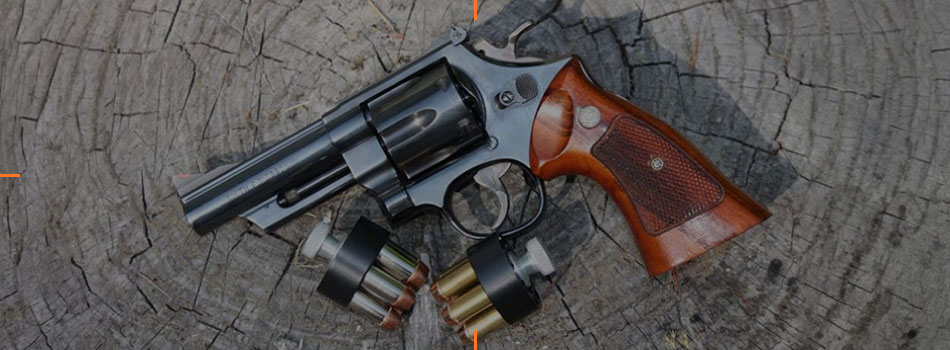
Smith & Wesson 686 2.5 Inch Holsters
A Smith & Wesson 686 2.5 inch holster should accommodate the short barrel while providing sufficient support for the L-frame and cylinder.
The shorter configuration makes IWB and close-riding OWB carry more realistic than with long-barrel versions, although the revolver's frame still creates more bulk than a compact handgun.
For users asking what holster works for a 2.5 inch 686, IWB and OWB provide practical starting points when the holster is made for the exact revolver configuration.
In practical terms, available options can be explored through the broader Smith & Wesson holsters selection.
Smith & Wesson 686 3 Inch Holsters
A Smith & Wesson 686 3 inch holster provides a relatively compact carry package while still requiring support for the revolver's L-frame.
IWB remains possible for users prioritizing concealment, while OWB provides more space around the cylinder and can reduce pressure against the body.
For users asking what is the best holster for a 3 inch Smith & Wesson 686, the most suitable carry style depends on whether concealment or external comfort is the higher priority.
In practical terms, 3 inch configurations can currently be researched through the main Smith & Wesson holsters category.
Smith & Wesson 686 4 Inch Holsters
A Smith & Wesson 686 4 inch holster should provide full support for the mid-length barrel while keeping the revolver stable around the belt or upper body.
The 4 inch configuration remains suitable for OWB and shoulder carry, while IWB is possible but places more revolver length and cylinder width inside the waistband.
For users asking what is the best holster for a 4 inch 686, OWB is a broadly practical choice while shoulder and IWB designs address different access and concealment requirements.
In practical terms, this configuration has its own dedicated selection of Smith & Wesson 686 4 inch holsters.
Smith & Wesson 686 5 Inch Holsters
A Smith & Wesson 686 5 inch holster should provide additional barrel coverage and support compared with shorter 686 configurations.
The longer profile makes OWB, shoulder and cross draw positions more practical for many users because these positions avoid placing the full barrel inside the waistband.
For users asking what holster works for a 5 inch 686, outside-the-waistband and upper-body carry generally provide more usable space than conventional concealed IWB positioning.
In practical terms, the broader Smith & Wesson holsters category should be used until a dedicated 5 inch page is available.
Smith & Wesson 686 6 Inch Holsters
A Smith & Wesson 686 6 inch holster should support the full long-barrel configuration and provide adequate clearance during standing and seated carry.
The additional barrel length makes conventional concealment more difficult and increases the value of OWB, shoulder and cross draw positions.
For users asking what is the best holster for a 6 inch Smith & Wesson 686, an OWB or shoulder rig is generally a more practical starting point than deep IWB concealment.
In practical terms, available configurations should be checked through the main Smith & Wesson holsters category.
Best Carry Positions for the Smith & Wesson 686
The best carry position for a Smith & Wesson 686 depends mainly on barrel length, concealment requirements and whether the revolver is frequently carried while seated.
OWB works across the broadest range of barrel lengths, while shoulder and cross draw carry become more useful as the barrel becomes longer. IWB is most practical with the shorter configurations.
For users asking what the best carry position for a 686 is, shorter revolvers provide more waistband options while longer revolvers benefit from positions that move the barrel outside the pants.
In practical terms, the carry method should change as barrel length increases rather than treating every 686 as the same size.
OWB Holsters for the Smith & Wesson 686
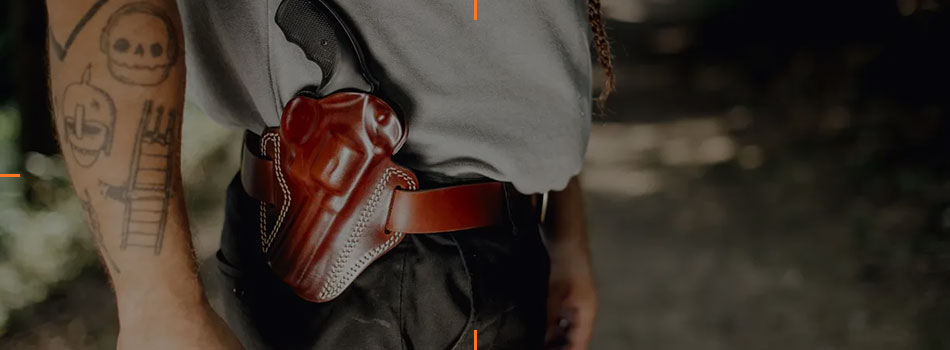
OWB carry is a broadly practical option for the Smith & Wesson 686 because it accommodates the revolver's cylinder and barrel outside the waistband.
The position reduces pressure inside the pants and can support both shorter and longer barrel configurations.
For users asking whether OWB is good for a 686, it is particularly useful when external comfort and firearm support matter more than maximum concealment.
In practical terms, OWB offers the widest general compatibility across 686 barrel lengths.
Smith & Wesson 686 Shoulder Holsters
A shoulder holster becomes increasingly useful for the Smith & Wesson 686 as barrel length and overall carry bulk increase.
The upper-body harness removes the revolver from the waistband and can be useful for prolonged seated carry or when a longer barrel is inconvenient at the belt.
For users asking whether a 686 shoulder holster is suitable for a 6 inch revolver, shoulder holsters are among the practical choices for longer configurations.
In practical terms, shoulder carry is most relevant when waistband space, barrel length or seated comfort makes belt carry less convenient.
Smith & Wesson 686 Cross Draw Holsters
Cross draw carry can provide useful seated access for a Smith & Wesson 686, particularly with longer barrel configurations.
The revolver sits on the side opposite the dominant hand, which can provide additional clearance compared with some conventional strong-side positions.
For users asking whether cross draw works for a 5 or 6 inch 686, cross draw holsters can be practical when seated access and barrel clearance are priorities.
In practical terms, cross draw becomes more relevant as conventional concealed carry becomes less convenient.
IWB Holsters for the Smith & Wesson 686
IWB carry is most realistic with shorter Smith & Wesson 686 barrel configurations.
The L-frame cylinder already occupies substantial waistband space, and additional barrel length increases the amount of revolver that must remain inside the pants.
For users asking whether a Smith & Wesson 686 can be carried IWB, shorter versions can be carried this way when the holster, body type and wardrobe provide enough room.
In practical terms, IWB becomes progressively less comfortable and less convenient as 686 barrel length increases.
Leather vs Kydex Holsters for the 686
Leather and Kydex can both work for a Smith & Wesson 686 when the holster is made for the correct barrel length and revolver configuration.
A 686 leather holster can provide flexible body contact and works naturally with OWB, shoulder and cross draw designs, while Kydex holsters provide rigid construction and consistent shape.
For users asking whether leather or Kydex is better for a 686, neither material is universally superior because carry position, comfort, weather exposure and maintenance requirements differ.
In practical terms, correct L-frame and barrel-specific fit matters more than choosing one material as universally better.
Concealing a Smith & Wesson 686
A Smith & Wesson 686 can be concealed, but shorter barrel configurations are substantially easier to accommodate than 5 or 6 inch versions.
The 2.5 and 3 inch configurations provide the most realistic starting points for conventional IWB concealment, while a 4 inch version requires more clothing and holster consideration. The 5 and 6 inch configurations generally make conventional daily concealment increasingly impractical.
For users asking whether a 686 can be concealed carried, the answer is yes for suitable configurations, but the L-frame cylinder and increasing barrel length impose practical limits.
In practical terms, users prioritizing discreet daily carry should generally consider shorter 686 configurations rather than attempting to conceal a long-barrel version in the same way.
Smith & Wesson 686 Holsters FAQ
A Smith & Wesson 686 should use a holster designed for its L-frame and exact barrel configuration. Barrel length should be confirmed before selecting IWB, OWB, shoulder or cross draw carry.
Holster compatibility depends on the actual cylinder outside profile, frame and other contact surfaces rather than chamber count alone.
A model-specific OWB holster is a practical general-purpose option for a 4 inch Smith & Wesson 686. Shoulder and IWB designs can also work when seated access or concealment is the higher priority.
A Smith & Wesson 686 can be concealed when its barrel length, holster and clothing provide adequate coverage. Shorter configurations are generally more practical for concealment than 5 or 6 inch versions.
OWB, shoulder and cross draw carry are practical options for a 6 inch Smith & Wesson 686 because they provide room for the longer barrel. Shoulder and cross draw positions become particularly useful when seated access or belt clearance matters.
Shared frame classification alone does not prove that two revolvers have identical holster-contact dimensions or fit.
Leather holsters are suitable for the Smith & Wesson 686 when molded for the correct barrel length and revolver configuration. Kydex is also a valid option, so material choice should depend on carry position, comfort and maintenance preference.
Conclusion: Smith & Wesson 686 Holsters Explained
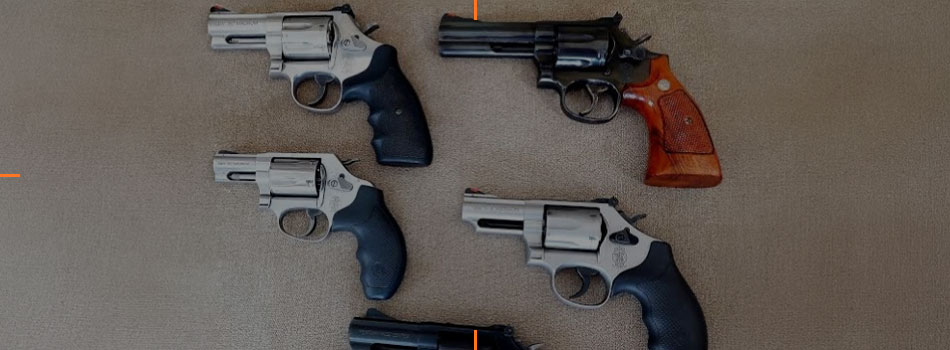
The correct Smith & Wesson 686 holster depends on the exact revolver configuration, barrel length and intended carry position.
Short 2.5 and 3 inch versions allow greater concealed-carry flexibility, 4 inches provides broader carry options, and 5 or 6 inch versions increasingly favor OWB, shoulder and cross draw designs.
For users asking how to choose a holster for Smith and Wesson 686 revolvers, barrel length should be confirmed first and 686 Plus compatibility should be treated separately until the exact fit is verified.
In practical terms, selecting through model-specific Smith & Wesson holsters prevents different 686 configurations from being treated as one universal holster fit.