


Table of Contents
A shoulder holster can be a good concealed carry option for users who spend substantial time seated, carry larger handguns, or regularly wear an outer garment.
Unlike waistband carry, a shoulder holster distributes the handgun across the upper body and keeps the waist free. A properly fitted shoulder holster for concealed carry can be particularly practical for driving, desk work, outdoor use and layered clothing.
For users asking who should use a shoulder holster, it is most relevant to people who value seated access, off-waist carry or better support for a large handgun and who can consistently wear a suitable cover garment.
In practical terms, shoulder carry trades some concealment simplicity and draw speed for improved seated comfort, weight distribution and compatibility with larger firearms.
Are Shoulder Holsters Good for Concealed Carry?
Shoulder holsters are good for concealed carry when the firearm can remain covered by an appropriate outer garment and the harness is correctly adjusted.
The system places the handgun beneath the arm rather than inside or outside the waistband, which can improve comfort for seated users but makes concealment more dependent on clothing.
For users asking are shoulder holsters good for concealed carry, they are most effective with jackets, overshirts and other garments that provide enough room to cover the handgun and harness.
In practical terms, a concealed carry shoulder holster works best when off-waist comfort matters more than minimal clothing requirements.
How to Choose a Shoulder Holster
The best shoulder holster is one that matches the handgun, preferred carry orientation, body size, retention needs and typical clothing.
Horizontal, vertical and rotating systems place the firearm differently beneath the arm, while harness design affects stability, concealment and long-term comfort.
For users asking how to choose a shoulder holster, the main factors are firearm size, muzzle orientation, harness adjustment, retention, material and the intended draw method.
In practical terms, the correct shoulder holster should secure the specific handgun while remaining stable and accessible throughout normal movement.
Vertical vs Horizontal Shoulder Holsters
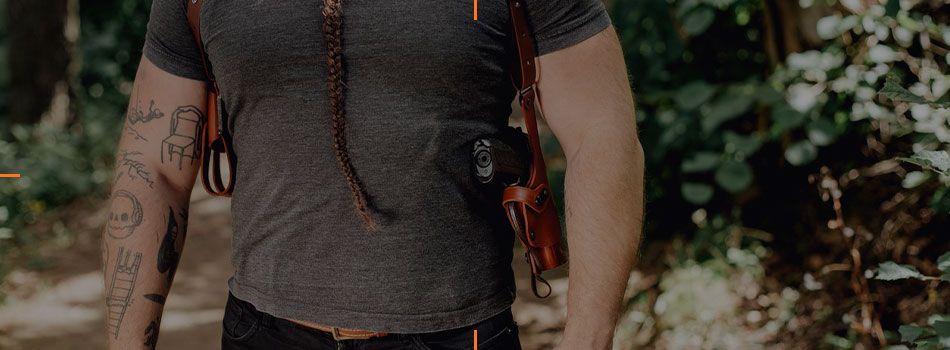
A vertical shoulder holster carries the handgun with the muzzle generally pointing downward, while a horizontal shoulder holster carries it across the body beneath the arm.
Horizontal designs can provide a relatively direct cross-body draw, but larger or longer handguns may project farther behind the torso and become harder to conceal.
For users asking whether a vertical or horizontal shoulder holster is better, horizontal carry often suits compact and full-size defensive pistols, while vertical carry can better accommodate long-barreled or bulky handguns.
Firearm dimensions and muzzle orientation should determine which configuration is more appropriate.
Roto and Swivel Shoulder Holsters
A roto shoulder holster uses a pivoting holster body that allows the firearm to be carried vertically and rotated into a more horizontal position during the draw.
The design combines the downward muzzle orientation of vertical carry with a draw motion intended to avoid the long upward extraction required by some fixed vertical rigs.
For users asking what a roto shoulder holster is, it is a rotating shoulder rig in which the holster changes orientation as part of the draw rather than remaining fixed in one position.
Roto and swivel systems can be useful for larger handguns when vertical carry is preferred but easier access is also required.
Shoulder Holster Harness Fit and Adjustment
A shoulder holster harness should fit close enough to remain stable without creating unnecessary pressure across the shoulders or neck.
The handgun should sit consistently beneath the arm, and adjustable straps or tie-downs can help limit movement during walking, bending and drawing.
For users asking are shoulder holsters comfortable, comfort depends heavily on correct harness adjustment, firearm weight and how evenly the rig distributes that weight.
In practical terms, a poorly fitted harness can make even a well-designed shoulder holster uncomfortable and difficult to conceal.
Leather vs Kydex Shoulder Holsters
Leather shoulder holsters emphasize body conformity and flexible harness construction, while Kydex emphasizes a rigid holster shell and consistent shape.
Leather is commonly associated with traditional shoulder systems because it can combine the holster body and harness into a flexible carry rig, while Kydex can provide more rigid retention characteristics. Different leather holsters are available for users who prefer this material across multiple carry styles.
For users asking whether leather shoulder holsters are better than Kydex, neither material is universally better because comfort, maintenance, retention and carry conditions differ.
Leather shoulder holster favors flexibility and body conformity, while Kydex favors rigid construction and shape retention.
Shoulder Holster Retention and Draw Speed
A shoulder holster should retain the firearm securely while allowing the retention system to be released consistently during the draw.
Thumb breaks, molded friction and other retention systems can affect both security and access, and the cross-body draw generally requires more movement than a conventional belt draw.
For users asking whether shoulder holsters are slow to draw from, they are often slower for most users than a practiced IWB or OWB draw because the cover garment, retention device and cross-body movement must all be managed.
In practical terms, retention should be secure without adding unnecessary complexity to an already longer draw sequence.
Who Should Use a Shoulder Holster
A shoulder holster is best suited to users whose daily activities make waistband carry uncomfortable or impractical.
Seated work, driving, outdoor use, layered clothing and large handguns are situations in which shoulder carry can provide advantages over traditional belt-mounted systems.
For users asking who benefits most from a shoulder holster, the strongest use cases involve extended sitting, off-waist carry and firearms that are difficult to support comfortably at the belt. Shoulder carry is a specialized solution rather than the default concealed carry method for every user.

Shoulder Holsters for Drivers and Seated Carry
A shoulder holster can provide easier access while seated because the handgun remains above the waist instead of being trapped between the body and seat.
This can be useful during extended driving, where some IWB and strong-side OWB positions become less comfortable or harder to reach.
For users asking whether shoulder holsters work well in a car, they can provide accessible off-waist carry when the cover garment and seat belt do not obstruct the draw.
In practical terms, frequent drivers are among the users most likely to benefit from shoulder carry.
Shoulder Holsters for Desk Work
A shoulder holster can be comfortable for desk work because the firearm does not press directly into the waistband while sitting.
The system still requires enough outer clothing to maintain concealment when standing, sitting or reaching across a workspace.
For users asking whether shoulder carry works for office or desk use, it can be practical when clothing and workplace rules allow consistent concealed carry.
In practical terms, seated comfort is a strength, while garment dependency remains a limitation.
Shoulder Holsters for Outdoor and Hiking Carry
A shoulder holster can keep a handgun accessible when belts, backpacks or outdoor equipment occupy the waist.
The upper-body position can also prevent interference between a belt holster and some backpack hip belts or additional gear.
For users asking whether shoulder holsters work for hiking, they can be useful when off-waist access and compatibility with other equipment are priorities. Shoulder carry can solve gear interference that makes conventional belt carry less convenient.
Shoulder Holsters for Cold Weather and Layered Carry
A shoulder holster works particularly well with layered clothing because jackets and heavier overshirts provide natural coverage for the handgun and harness.
Cold-weather clothing can improve concealment, although the outer layer must still be opened or moved before the firearm can be accessed.
For users asking whether shoulder holsters are good for winter carry, layered clothing generally makes them easier to conceal than lightweight summer clothing. Shoulder carry becomes more practical as outer garments become a consistent part of everyday clothing.
Shoulder Holsters for Large and Long-Barreled Handguns
A shoulder holster can support large or long-barreled handguns without placing their full size and weight at the waist.
Vertical and roto configurations are especially relevant when a long barrel would protrude excessively in a horizontal rig.
For users asking what shoulder holster works for a large handgun, a vertical or rotating design can provide better concealment and muzzle orientation than a fixed horizontal system. Larger firearms are one of the strongest reasons to consider shoulder carry.
Best Shoulder Holsters by Handgun Type
The best shoulder holster depends on the handgun's overall length, weight, grip size and intended level of concealment.
Full-size pistols and revolvers place greater demands on harness stability, while compact pistols provide more flexibility in horizontal positioning.
For users asking which shoulder holster is best for a particular handgun, the firearm should be matched to a model-specific holster body and appropriate carry orientation.
In practical terms, handgun dimensions should determine the shoulder rig rather than selecting one universal design for every firearm.

Shoulder Holsters for 1911 Pistols
A shoulder holster for a 1911 should support the pistol's frame and barrel length while keeping its weight balanced across the harness.
Full-size 1911 pistols can work in horizontal, vertical or roto systems depending on body size and concealment requirements. Model-specific 1911 holsters allow the holster body to match the intended pistol configuration.
For users asking what shoulder holster works for a 1911, full-size models generally require more attention to harness stability and grip printing than smaller pistols.
In practical terms, a shoulder holster for 1911 carry should be selected around the exact pistol size and preferred orientation.
Shoulder Holsters for Full Size Semi Autos
A shoulder holster can carry a full-size semi-automatic pistol effectively when the harness provides enough support and the grip remains concealed.
Horizontal carry can provide direct access, while vertical or roto designs may reduce rearward projection with longer pistols.
For users asking whether shoulder holsters work for full-size pistols, they are often most useful when the handgun is uncomfortable to carry inside the waistband for extended periods.
In practical terms, full-size pistols require a stable harness and sufficient outer-garment coverage.
Shoulder Holsters for Revolvers
A shoulder holster for a revolver can accommodate the wide cylinder, substantial frame and long barrels found on many revolver designs.
Compact revolvers can use horizontal systems, while large-frame and long-barreled models often fit more naturally in vertical or rotating rigs. Model-specific revolver holsters should account for cylinder width and barrel configuration.
For users asking whether shoulder holsters work for revolvers, they are particularly relevant to medium, large and long-barreled revolvers that are cumbersome inside the waistband.
In practical terms, revolver size and barrel length should determine the shoulder carry orientation.
Shoulder Holsters for Compact and Subcompact Pistols
A shoulder holster can carry compact and subcompact pistols with less bulk than a comparable full-size handgun.
Their shorter barrels and grips can make horizontal concealment easier, although the harness itself still requires an outer garment.
For users asking whether a shoulder holster makes sense for a small pistol, it can work well for users who specifically need seated or off-waist carry but may be less discreet than IWB carry under light clothing.
In practical terms, compact firearms improve shoulder concealment but do not eliminate the clothing requirements of the harness.
How to Conceal a Shoulder Holster
A shoulder holster is concealed most effectively beneath an open-front jacket, loose overshirt or other outer layer with enough room around the chest and arms.
The handgun should sit close to the torso without causing the grip, muzzle or harness straps to create visible outlines. Other concealed carry holsters may be more practical when an outer garment cannot be worn consistently.
For users asking how to conceal a shoulder holster, loose structured clothing generally works better than thin or fitted garments because it reduces printing from both the firearm and harness.
In practical terms, a shoulder holster is difficult to conceal under only a fitted T-shirt and works substantially better with a dedicated cover layer.
Shoulder Holsters FAQ
Shoulder holsters are good for concealed carry when an outer garment can consistently cover the firearm and harness. They are particularly useful for seated carry, larger handguns and users who prefer to keep the waist free.
A vertical shoulder holster is generally better suited to long or bulky handguns, while a horizontal shoulder holster can provide a more direct draw with shorter firearms. The better option depends on firearm dimensions, concealment and preferred muzzle orientation.
Shoulder holsters can be comfortable because they distribute firearm weight across the upper body instead of concentrating it at the waist. Comfort depends heavily on correct harness adjustment, firearm weight and balanced loading.
A shoulder holster is difficult to conceal reliably beneath only a fitted T-shirt because the firearm and harness can create visible outlines. A loose overshirt, jacket or other cover layer usually provides more practical concealment.
Leather shoulder holsters offer flexible body contact and traditional harness construction, while Kydex provides a more rigid holster shell. Neither is universally better because the appropriate material depends on comfort, maintenance and retention preferences.
A roto shoulder holster carries the firearm vertically and allows the holster body to rotate during the draw. This design combines downward muzzle orientation during carry with easier access than some fixed vertical rigs.
Shoulder holsters are generally slower for many users than a practiced IWB or OWB draw because access requires managing a cover garment and moving across the torso. Consistent practice can improve efficiency, but the draw path remains mechanically different from belt carry.
Shoulder holsters work well for revolvers and can be particularly useful with medium, large and long-barreled models. Vertical and roto rigs are often better suited to larger revolvers than compact horizontal systems.
Conclusion: Shoulder Holsters for Concealed Carry Explained
A shoulder holster is a practical concealed carry option for seated users, drivers, outdoor users and people carrying larger handguns beneath suitable outer clothing.
Horizontal rigs favor direct access, vertical systems accommodate longer firearms, and roto designs combine vertical carry with a rotating draw mechanism. Proper harness adjustment, retention and garment choice remain essential for effective shoulder carry.
For users asking how to find the best shoulder holster, the correct choice depends on firearm size, carry orientation, harness fit, concealment requirements and preferred material. A model-specific selection of shoulder holsters allows these factors to be matched to the intended handgun.
In practical terms, shoulder carry is most effective when its advantages in seated comfort and weight distribution outweigh its slower draw, greater clothing requirements and additional training considerations.