


Table of Contents
The Taurus 650 vs S&W 642 comparison sits squarely in the world of small-frame defensive revolvers. Both are double-action-only, snag-free, two-inch-barrel revolvers designed for concealed carry. On the surface, they appear nearly interchangeable. In practice, they are built around very different philosophies.
The key difference is material and chambering. The Taurus 650 is an all-steel revolver chambered in .357 Magnum, capable of firing .38 Special as well. The Smith & Wesson 642 is an Airweight aluminum-frame revolver chambered for .38 Special +P only. That structural distinction influences recoil, durability, and daily carry comfort more than any cosmetic detail.
Taurus 650 Overview
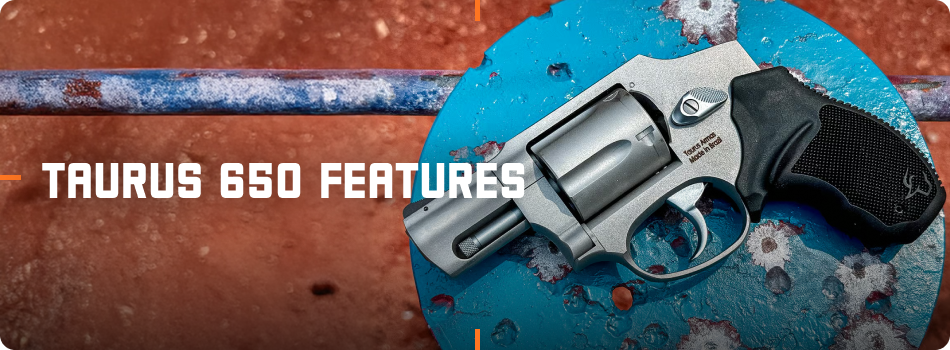
The Taurus 650 is a small-frame, five-shot revolver built from steel and chambered in .357 Magnum. It features a fully enclosed hammer, making it double-action-only and resistant to snagging during pocket or waistband draw.
Because it is rated for .357 Magnum, the 650 is built to withstand higher pressures. That strength comes with added weight. Depending on finish and production year, the Taurus 650 typically weighs around 23 ounces. For a snub-nose revolver, that places it on the heavier side.
The added mass does two things. First, it reduces felt recoil when firing .38 Special loads. Second, it makes the revolver more durable over long-term use with defensive ammunition. Many owners choose to carry .38 +P in it while retaining the option to fire .357 Magnum if desired.
In hand, the 650 feels solid and dense. It is not delicate. It is built more like a compact steel revolver than a lightweight backup gun.
Smith & Wesson 642 Overview
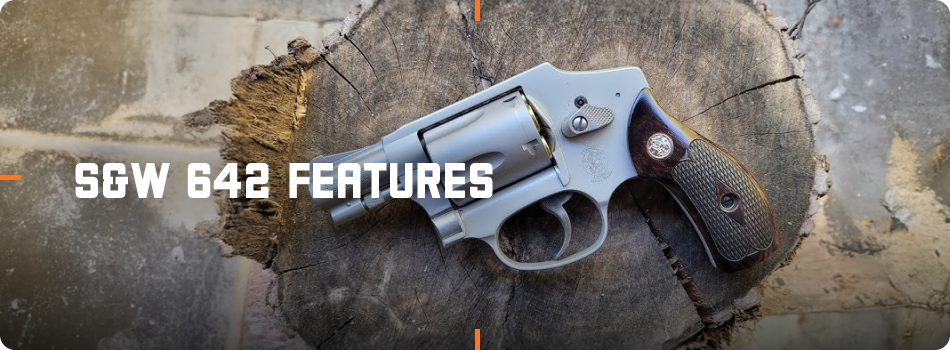
The Smith & Wesson 642 is part of the J-frame Airweight line. It uses an aluminum alloy frame with a stainless steel barrel and cylinder. It is chambered for .38 Special +P and is not rated for .357 Magnum.
The 642 typically weighs around 14.5 to 15 ounces unloaded. That makes it significantly lighter than the Taurus 650. In pocket carry or ankle carry, the difference is immediately noticeable.
Like the 650, the 642 uses an internal hammer design, eliminating external hammer spurs that could catch on clothing. The trigger is double-action-only, consistent with its defensive purpose.
The 642 is built for minimal weight and maximum concealability. It is not designed for high-volume magnum shooting. It is designed to be carried often and shot enough to maintain proficiency.
Taurus 650 vs S&W 642 Specs
Size, Weight, and Construction
Both revolvers typically feature 2-inch barrels and five-round cylinders. Overall dimensions are similar due to their small-frame construction. The meaningful difference lies in material.
The Taurus 650 is all steel. The Smith & Wesson 642 uses an aluminum alloy frame. That material change results in roughly an 8 to 9 ounce weight difference. In the context of daily carry, that is substantial.
For belt carry in a quality holster, the extra weight of the 650 may not matter. For pocket carry, the lighter 642 tends to feel less intrusive and easier to forget.
Durability also favors steel when discussing long-term magnum use. However, since the 642 is not magnum-rated, the comparison becomes one of intended use rather than strength alone.
Caliber and Recoil
Caliber capability defines this matchup.
The Taurus 650 is chambered in .357 Magnum and can safely fire .38 Special and .38 Special +P. The Smith & Wesson 642 is chambered in .38 Special and rated for +P, but not for .357 Magnum.
In a small-frame revolver, .357 Magnum produces sharp recoil and significant muzzle blast. Many experienced shooters choose to load steel snub-nose revolvers with .38 +P for better control and faster follow-up shots.
In the lightweight 642, even .38 +P can feel brisk. Recoil is more pronounced due to reduced mass. For some shooters, extended practice sessions can become uncomfortable.
In practical defensive use, most owners of both revolvers carry high-quality .38 Special +P loads. The 650’s magnum rating adds versatility, but many users do not regularly fire magnum loads from a two-inch barrel.
Trigger and Shooting Characteristics
Both revolvers operate in double-action-only mode.
J-frame triggers, including that of the 642, are known for relatively heavy but smooth pulls. Smith & Wesson has a long-standing reputation for consistent double-action trigger feel in small-frame revolvers.
The Taurus 650 typically has a comparable pull weight. Smoothness can vary slightly by individual gun, as is common with small revolvers. Both triggers require deliberate pressure and proper technique.
Due to its heavier frame, the 650 may feel slightly more manageable during firing. The 642’s light weight amplifies recoil impulse, making follow-up shots more dependent on grip technique.
Neither revolver is designed for rapid target competition. Both are built for close-range defensive reliability.
Reliability and Longevity
Revolvers are mechanically simple but rely on proper timing and lockup.
Smith & Wesson J-frames, including the 642, have decades of documented service in civilian and law enforcement backup roles. The platform has an established reliability history when maintained properly.
The Taurus 650 shares the same small-frame revolver concept and benefits from its all-steel construction when discussing durability under higher-pressure loads.
Finish wear may appear sooner on lightweight alloy frames due to daily carry friction. Steel frames, while heavier, can sometimes tolerate cosmetic wear differently over time.
Routine maintenance for both involves basic cleaning, inspection of timing, and monitoring for wear. Both are designed for defensive carry rather than extremely high round counts.
Concealed Carry Practicality
The S&W 642 was built specifically with lightweight concealed carry in mind. Its reduced weight makes it particularly well suited for pocket carry. Many S&W 642 holsters users carry it in dedicated pocket holsters where weight directly affects comfort.
The Taurus 650, while still compact, is better suited for belt carry due to its added mass. Taurus 650 holsters, and especially In waistband holsters, the weight is less noticeable. In pockets, the difference becomes obvious.
Both revolvers benefit from enclosed hammer designs. There is minimal risk of snagging during draw. That design has long made small-frame revolvers attractive for deep concealment roles.
The decision between them often comes down to how and where you intend to carry.
Conclusion
The Taurus 650 vs S&W 642 comparison is less about brand loyalty and more about carry philosophy.
If you prioritize minimal weight and maximum carry comfort, the Smith & Wesson 642 stands out. It is easier to carry for long hours and excels in pocket or backup roles.
If you prefer the durability of steel and want the option of .357 Magnum capability, the Taurus 650 offers added strength and versatility at the cost of weight.
Both revolvers serve the same core function: close-range defensive carry in a compact, snag-free platform. The better choice depends on whether you value lighter daily carry or heavier-duty capability.