Table of Contents
- Introduction
- What Is an IWB Holster?
- What Is an OWB Holster?
- IWB Holster Pros and Cons
- OWB Holster Pros and Cons
- Concealment: IWB vs OWB Holsters
- Draw Speed and Access: IWB vs OWB
- Carry Positions for IWB and OWB Holsters
- Which Handguns Suit IWB and OWB Carry?
- IWB and OWB vs Other Carry Styles
- IWB vs OWB Holsters FAQ
- Conclusion
IWB carry places the holster inside the waistband for stronger concealment, while OWB carry places it outside the waistband for easier access and less pressure against the body.
Neither carry style is universally better because clothing, climate, body type, handgun size and daily wear duration change which advantages matter most.
For users asking whether to choose IWB or OWB, IWB generally suits users who prioritize concealment, while OWB generally suits users who prioritize comfort, access and carrying larger handguns.
In practical terms, the right choice depends on whether concealment or off-body comfort at the waist is the higher priority.
IWB vs OWB Holsters at a Glance
IWB and OWB holsters differ mainly in concealment, body contact, clothing requirements and ease of access.
An IWB holster uses the waistband to hide much of the firearm, while an OWB holster keeps the entire holster outside the pants.
For users asking for a quick IWB vs OWB comparison, IWB favors discretion while OWB favors comfort and easier access.
In practical terms, both can work for daily carry when the handgun, belt and wardrobe support the chosen position.
| Factor | IWB | OWB |
|---|---|---|
| Concealment | Easier under light clothing | Usually needs a covering garment |
| Comfort | More pressure and body contact | Less pressure inside the waistband |
| Draw speed | Often slower for most users | Usually easier to access |
| Clothing requirements | May require extra waistband room | Requires garment coverage for concealment |
| Wear over long days | Can increase heat and pressure | Generally less restrictive |
| Gun size suitability | Best with compact to moderate sizes | Works well across a wider size range |
| Best season | Useful in warm weather with light clothing | Easier to conceal in cooler weather |
What Is an IWB Holster?
An IWB holster carries the handgun inside the waistband with most of the holster body positioned between the wearer and the pants.
The holster is normally secured to the belt or waistband with clips, loops or similar attachments, leaving the grip above the belt line for access.
For users asking what an inside the waistband holster does to the waistline, it adds the thickness of both the holster and handgun inside the pants.
In practical terms, IWB holsters provide strong concealment but require enough waistband space for comfortable daily wear.
What Is an OWB Holster
An OWB holster carries the handgun completely outside the waistband and attaches to the belt through loops, slots, a paddle or another external mounting system.
Ride height determines how high the firearm sits relative to the belt, while cant describes the angle at which the handgun is carried.
For users asking how an outside the waistband holster works, it supports the firearm externally without taking space inside the pants.
In practical terms, OWB holsters generally provide easier access and more room for larger firearms but require more clothing to conceal.
IWB Holster Pros and Cons
IWB holsters provide strong concealment and clothing flexibility but create more direct contact between the firearm, holster and body.
The design hides most of the handgun below the waistband, but this also increases heat, pressure and sensitivity to firearm size.
For users asking whether IWB carry is better, it is better mainly when concealment under ordinary clothing is the priority.
In practical terms, IWB trades some comfort and access for a lower visible profile.
Advantages of IWB Holsters
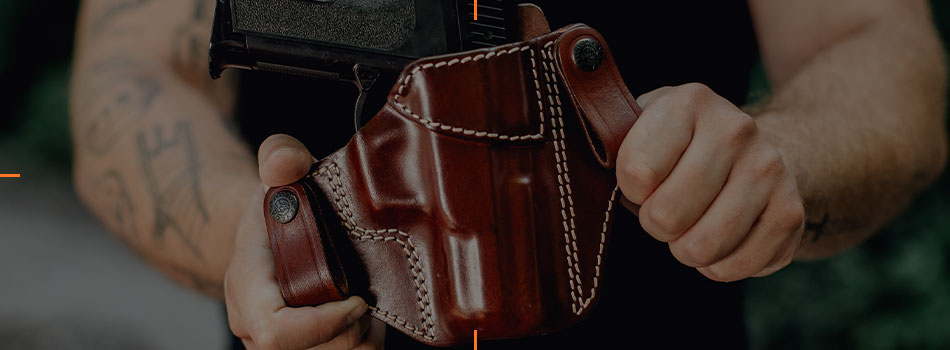
IWB holsters conceal more easily because the waistband hides most of the handgun and holster body.
They can often be worn beneath a T-shirt or light overshirt without requiring the larger outer garment commonly needed for concealed OWB carry.
For users asking what the main benefits of IWB holsters are, the strongest advantages are concealment, discretion in warm weather and compatibility with compact handguns.
In practical terms, IWB is well suited to users who want a concealed carry holster with minimal dependence on jackets or heavier layers.
Drawbacks of IWB Holsters
IWB holsters can be less comfortable because the handgun occupies space inside the waistband and remains in closer contact with the body.
They can increase heat and sweat exposure, require additional waistband room and generally involve a more restricted draw path than OWB carry.
For users asking why IWB carry can be uncomfortable, firearm thickness, body shape, seated position and waistband pressure all contribute.
In practical terms, IWB concealment comes with greater clothing-fit and long-wear compromises.
OWB Holster Pros and Cons
OWB holsters provide comfortable external carry and accessible firearm positioning but are harder to conceal consistently.
The handgun does not occupy space inside the waistband, which reduces pressure while allowing the holster to support larger firearm sizes more naturally.
For users asking whether OWB carry is better, it is better mainly when comfort, straightforward access or handgun size matters more than maximum discretion.
In practical terms, OWB trades concealment efficiency for more space and reduced body pressure.
Advantages of OWB Holsters
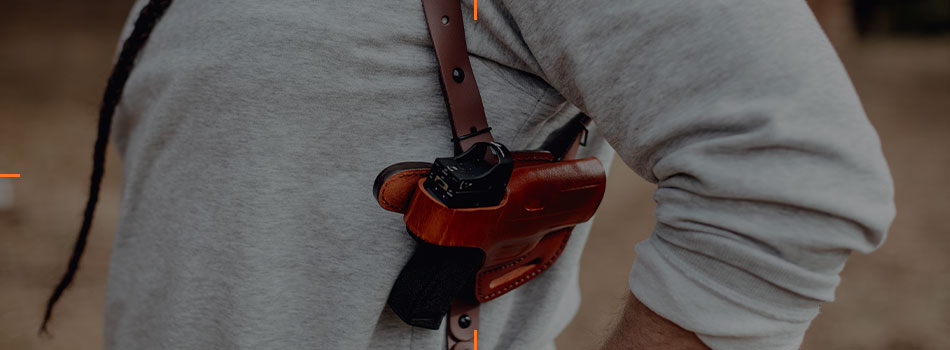
OWB holsters generally provide easier access, less waistband pressure and better accommodation of larger handguns.
External positioning also makes it easier to use structured leather holsters or rigid Kydex holsters without placing the entire holster shell against the body.
For users asking why OWB holsters are comfortable, the main reason is that neither the gun nor most of the holster occupies space inside the pants.
In practical terms, OWB works well for long wear, range use and users carrying larger firearms.
Drawbacks of OWB Holsters
OWB holsters are harder to conceal because the entire firearm and holster remain outside the waistband.
A covering garment is usually required, and the handgun can print more noticeably when bending, reaching or when clothing moves away from the body.
For users asking what the disadvantage of OWB concealed carry is, the main limitation is greater dependence on clothing and weather conditions.
In practical terms, OWB concealment becomes more difficult in warm climates where jackets and heavier outer layers are impractical.
Concealment: IWB vs OWB Holsters
IWB generally conceals more easily than OWB because the waistband covers more of the handgun.
OWB can still be concealed effectively when ride height, cant, handgun size and clothing keep the firearm close to the body. Purpose-built concealed carry holsters use these factors regardless of whether the holster sits inside or outside the waistband.
For users asking whether IWB or OWB prints less, IWB usually has an advantage, but grip size and garment fit can matter more than the location of the holster shell itself.
In practical terms, concealment depends on firearm dimensions, positioning and clothing rather than the IWB or OWB label alone.
Comfort: IWB vs OWB Holsters
OWB is generally more comfortable over long periods because it does not place the firearm inside the waistband.
IWB may require pants with additional waist room and can create more pressure while sitting or driving, while OWB reduces internal waistband pressure but can still interact with seats and outer clothing.
For users asking whether IWB holsters are comfortable, they can be comfortable when firearm size, body shape and waistband space are matched correctly.
In practical terms, OWB usually favors long-duration comfort while IWB favors concealment despite greater body contact.
Draw Speed and Access: IWB vs OWB
OWB generally provides a simpler and faster access path for most users because less clothing and waistband material surrounds the holster.
IWB access can require clearing a cover garment and reaching deeper around the waistband, while OWB still requires garment clearance when carried concealed.
For users asking which is faster to draw from, IWB or OWB, OWB usually has the advantage, although familiarity and holster design strongly influence practical access.
In practical terms, draw access should be considered together with concealment rather than treated as a separate reason to choose one style.
Carry Positions for IWB and OWB Holsters
IWB and OWB holsters can be positioned at several points around the waist, but not every position works equally well for both styles.
Appendix, strong-side hip and behind-the-hip positions differ in concealment, comfort and seated accessibility.
For users asking where to carry an IWB or OWB holster, body type, firearm length, clothing and sitting habits should guide the choice.
In practical terms, carry position can affect comfort and concealment as much as choosing between IWB and OWB.
Appendix Carry
Appendix carry places an IWB holster toward the front of the waistband and is primarily used for concealed carry.
The position can conceal compact and full-size handguns efficiently but may create additional pressure while sitting depending on firearm length and body shape.
For users asking whether an appendix carry holster is comfortable, comfort varies significantly with holster geometry, ride height and individual anatomy.
In practical terms, appendix carry prioritizes concealment and front-of-body access while requiring careful fit.
Strong Side Hip Carry
Strong-side hip carry places the handgun near the dominant side and works with both IWB and OWB holsters.
OWB usually feels less restrictive in this position, while IWB provides better concealment beneath lighter clothing.
For users asking whether strong-side carry is better IWB or OWB, IWB favors discretion while OWB favors comfort and straightforward access.
In practical terms, strong-side hip carry is one of the most flexible positions for comparing both systems directly.
Behind the Hip Carry
Behind-the-hip carry places the handgun slightly behind the strong-side hip and can improve concealment by following the body's rear contour.
Both IWB and OWB designs can use this position, although sitting and reaching can affect comfort and access differently.
For users asking whether behind-the-hip carry conceals well, it can reduce visible grip projection when clothing falls naturally over the firearm.
In practical terms, the position can balance concealment and comfort but may be less accessible while seated.
Small of Back Carry
Small-of-back carry places the firearm near the center of the lower back but introduces significant access and injury concerns.
It is generally slower to access and creates a spinal injury risk if the wearer falls or lands directly on the firearm.
For users asking whether small-of-back carry is recommended, it is not a preferred option when safer and more accessible waist positions are available.
In practical terms, appendix, hip or behind-the-hip positions avoid the specific spinal impact risk associated with small-of-back carry.
Which Handguns Suit IWB and OWB Carry?
Compact and subcompact handguns generally suit IWB carry more easily, while OWB accommodates full-size and long-barreled handguns with fewer space restrictions.
Larger firearms can still be carried IWB, but additional barrel length, grip size and overall bulk increase waistband pressure and concealment difficulty.
For users asking whether large handguns are better carried IWB or OWB, OWB usually provides more practical support and comfort, especially for long-barreled revolver holsters.
In practical terms, firearm size increasingly favors OWB as overall length and bulk increase.
Do You Need a Different Belt for IWB and OWB
Both IWB and OWB carry benefit from a supportive belt that limits unwanted holster and firearm movement.
OWB places more weight outside the waistband, while IWB relies on the belt to stabilize clips or loops against the pants and body.
For users asking whether a special holster belt is necessary, belt rigidity often matters more to stability than small differences between similar made-to-fit holsters.
In practical terms, either carry style performs better when the belt can support the handgun without excessive sagging or movement.
IWB and OWB vs Other Carry Styles
Shoulder and cross draw carry can outperform IWB and OWB in specific situations such as prolonged sitting, driving or carrying long-barreled handguns.
Shoulder holsters move firearm weight away from the waist, while cross draw holsters can provide easier seated access than some strong-side positions.
For users asking whether IWB or OWB is always the best carry method, neither is ideal for every activity or handgun.
In practical terms, shoulder and cross draw carry become more relevant when seated access, waist-mounted equipment or handgun length makes conventional belt carry inconvenient.
Which Carry Style Should You Choose
IWB is the better starting point when concealment under light clothing is the main requirement, while OWB is the better starting point when comfort and handgun size are more important.
Climate, wardrobe, work routine and firearm dimensions can change that recommendation, so the decision should reflect actual daily use rather than a universal ranking.
For users asking how to choose between IWB and OWB, the most useful approach is to match each carry style to the conditions in which the firearm will normally be worn.
In practical terms, the following profiles provide a practical starting framework.
| User profile | Better starting point | Why |
|---|---|---|
| Hot-climate daily carry | IWB | Conceals without requiring a jacket, although sweat contact increases |
| Office and business dress | IWB | Usually easier to keep discreet beneath normal clothing |
| Outdoor and range use | OWB | Easier access and less need for deep concealment |
| Seated work and driving | OWB | Reduces pressure inside the waistband, although seat position still matters |
| Large-frame handguns | OWB | Provides more external space and support |
| New carriers | OWB | Often easier to fit and wear comfortably while learning preferences |
IWB vs OWB Holsters FAQ
IWB is generally easier to conceal because most of the handgun sits below the waistband. OWB can still work for concealed carry when a suitable covering garment keeps the firearm close to the body.
IWB holsters can be comfortable when the firearm, holster position and waistband space match the wearer. They generally create more pressure and heat against the body than OWB holsters.
An OWB holster can be concealed beneath a jacket, overshirt or other garment that fully covers the firearm. It usually requires more clothing coverage than an IWB holster.
IWB carry often benefits from additional waistband room because the handgun and holster sit inside the pants. The amount of extra space required depends on firearm thickness, holster design and clothing fit.
OWB is generally faster to access for most users because the handgun sits outside the waistband. A concealed OWB holster still requires the covering garment to be moved before access.
Whether OWB carry is legal depends on the state, jurisdiction and circumstances in which the firearm is carried. Local laws and current regulations should always be checked before selecting a carry method.
OWB is often more comfortable for long wear because the firearm does not occupy space inside the waistband. Individual body type, handgun size and daily activity can still make another carry position more suitable.
Both IWB and OWB holsters benefit from a supportive belt that limits sagging and unwanted movement. Belt requirements depend on handgun weight, holster attachment and the way the firearm is carried.
Conclusion: IWB vs OWB Holsters Explained
IWB and OWB holsters solve different carry priorities, with IWB favoring concealment and OWB favoring comfort and access.
IWB works particularly well with lighter clothing and compact firearms, while OWB accommodates larger handguns and longer wear with less waistband pressure. Both remain common forms of concealed carry holsters when matched with appropriate clothing.
For users asking which carry style is better, neither IWB nor OWB is universally superior because body type, climate, wardrobe, firearm size and daily routine determine the better fit.
In practical terms, IWB should be chosen when concealment is the higher priority and OWB when external comfort, access or firearm size matters more.