


Table of Contents
The Glock 19 Gen 6 is the newest evolution of Glock’s compact striker-fired 9mm platform. The Glock 19 series has been widely used for decades by civilian carriers, law enforcement agencies, and professional shooters because of its simple design, mechanical reliability, and balanced size.
Like previous generations, the Glock 19 Gen 6 keeps the compact frame, the 15-round magazine capacity, and the Safe Action striker-fired system that define the Glock 19 platform. At the same time, every new generation brings questions from shooters about reliability, design changes, and potential issues.
The short answer is that no widespread systemic problems have been reported with the Glock 19 Gen 6. Most early feedback from shooters and reviewers describes the pistol as consistent and reliable. However, several commonly discussed topics appear in user feedback, including trigger feel, cosmetic slide wear, and minor compatibility questions with parts from earlier generations.
In this guide, we examine the most frequently discussed Glock 19 Gen 6 problems, explain which concerns are real issues and which are normal characteristics of the platform, and compare early reliability feedback with previous Glock generations.
Are There Any Glock 19 Gen 6 Problems?
The short answer is no major systemic problems have been widely reported with the Glock 19 Gen 6. The pistol continues to use the same core mechanical platform that made previous Glock generations known for reliability and durability.
The Glock 19 Gen 6 retains Glock’s Safe Action striker-fired system, a relatively simple internal mechanism with few moving parts. This design has historically contributed to the platform’s reputation for consistent function across a wide range of conditions and ammunition types.
Most early reports from shooters and reviewers indicate that the Glock 19 Gen 6 functions reliably with standard 9×19 ammunition and factory Glock magazines. The compact frame, steel slide, and polymer construction remain largely unchanged from the previous generation, which means the overall reliability characteristics are very similar to the Gen 5 models.
That said, no firearm platform is completely free from discussion among users. Some shooters mention topics such as trigger feel, cosmetic slide finish wear, and minor compatibility questions with earlier generation parts. These points are frequently discussed in user feedback, but they are generally considered normal characteristics of the platform rather than critical reliability issues.
Common Glock 19 Gen 6 Issues
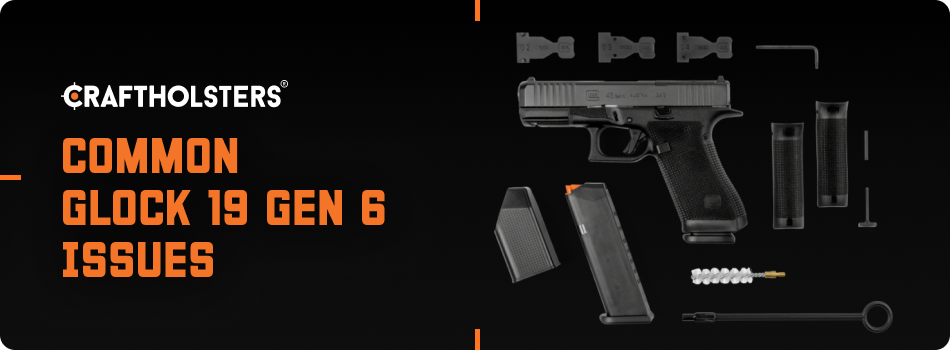
The Glock 19 Gen 6 does not show widely reported mechanical failures, but several topics appear regularly in shooter discussions and early reviews. Most of these points relate to trigger characteristics, cosmetic wear, and break-in behavior, which are common observations with many service pistols rather than true reliability defects.
Below are the most commonly discussed Glock 19 Gen 6 issues mentioned by shooters.
Glock 19 Gen 6 Trigger Feel
The most frequently discussed Glock 19 Gen 6 issue is the factory trigger feel. The pistol uses Glock’s Safe Action striker-fired trigger system, which is designed for reliability and consistency rather than a light competition-style trigger.
Some shooters describe the initial trigger pull as firm or slightly gritty when the pistol is brand new. This is a long-standing characteristic of many Glock pistols rather than a Gen 6-specific defect. In most cases, the trigger becomes noticeably smoother after several hundred rounds as internal contact surfaces wear in during normal use.
Glock 19 Gen 6 Slide Finish Wear
Another topic occasionally mentioned by users is cosmetic slide finish wear, especially after repeated holster use. This typically appears as light polishing on high-contact areas such as the slide edges or front serrations.
This type of wear is common on many duty pistols and usually occurs when the firearm is regularly drawn and re-holstered. Importantly, finish wear does not affect the mechanical reliability or safety of the Glock 19 Gen 6, and it is generally considered normal cosmetic aging rather than a functional issue.
Glock 19 Gen 6 Break-In Period
Some shooters report that the Glock 19 Gen 6 can feel slightly tight when brand new, particularly during the first range session. This is sometimes described as a short break-in period where the slide cycling and trigger action become smoother after initial use.
After several hundred rounds, most users report that the pistol settles into its typical Glock operating feel. This behavior is not unusual for new firearms and is generally part of normal mechanical wear-in rather than a reliability concern.
Glock 19 Gen 6 Reliability
The Glock 19 Gen 6 continues the reliability-focused design philosophy that has defined the Glock platform for decades. The pistol uses the same Safe Action striker-fired system, a relatively simple mechanism with a small number of internal parts, which contributes to consistent function and ease of maintenance.
Early range reports and user feedback indicate that the Glock 19 Gen 6 performs reliably with standard 9×19 ammunition and factory Glock magazines. The compact frame, steel slide, and polymer construction remain largely unchanged from the Gen 5 platform, meaning the reliability characteristics are very similar to previous Glock generations.
Another factor that supports the platform’s reliability is its tolerance for different ammunition types and environmental conditions. Glock pistols have long been known for functioning across a wide range of ammunition loads and operating environments, which is one reason they are commonly used by both civilian carriers and law enforcement agencies.
While long-term reliability data continues to develop as more Gen 6 pistols enter widespread use, early observations suggest that the Glock 19 Gen 6 maintains the durability and functional consistency associated with the Glock 19 platform.
Glock 19 Gen 6 vs Gen 5 Reliability
The Glock 19 Gen 6 and Glock 19 Gen 5 share the same core operating system and overall mechanical architecture. Both pistols use Glock’s Safe Action striker-fired design, polymer frame construction, and the standard 15-round Glock 19 magazine system.
Because the Gen 6 generation builds directly on the Gen 5 platform, the overall reliability characteristics between the two models remain very similar. Most of the updates in the Gen 6 generation focus on refinements to ergonomics, slide design, and internal components, rather than a complete redesign of the firing system.
In practical terms, shooters should expect comparable reliability between Glock 19 Gen 6 and Gen 5 models when using factory magazines and quality 9×19 ammunition.
For a full technical breakdown of design differences, performance changes, and reliability comparisons, see our dedicated Glock 19 Gen 6 vs Gen 5 comparison guide.
Are Glock 19 Gen 6 Problems Serious?
The commonly discussed Glock 19 Gen 6 problems are generally not considered serious mechanical issues. Most of the topics mentioned by shooters—such as trigger feel, cosmetic slide wear, or a short break-in period—are typical characteristics of service pistols rather than signs of design flaws.
The Glock 19 platform has been in continuous use for decades, and the Gen 6 generation keeps the same fundamental Safe Action operating system and compact frame design that previous generations used successfully. Because of this shared mechanical architecture, the overall reliability profile remains very similar to earlier Glock models.
For most users, the observations discussed in reviews and forums represent minor preferences or normal wear patterns, not functional defects. When used with quality ammunition and factory magazines, the Glock 19 Gen 6 continues to perform as a dependable compact handgun.
This means that while discussions about Glock 19 Gen 6 issues exist—as they do with almost any firearm platform—they rarely translate into systemic reliability concerns or widespread mechanical problems.
Glock 19 Gen 6 Problems FAQ
No widespread reliability problems have been reported with the Glock 19 Gen 6. Early feedback from shooters and reviewers indicates that the pistol functions consistently with factory magazines and standard 9×19 ammunition.
The most frequently mentioned topic is the factory trigger feel. Some shooters describe the trigger as firm or slightly gritty when the pistol is new, though it usually becomes smoother after regular use.
No clear evidence suggests that the Glock 19 Gen 6 has more reliability issues than the Gen 5. Both generations share the same core design and generally show similar performance in normal use.
Conclusion: Glock 19 Gen 6 Problems Explained
Overall, the Glock 19 Gen 6 does not show any widely reported systemic problems. The pistol continues to rely on the same Safe Action operating system and compact frame design that made earlier Glock 19 generations known for reliability and durability.
Most of the commonly discussed Glock 19 Gen 6 issues—such as trigger feel, cosmetic slide finish wear, and a short break-in period—are minor observations rather than mechanical defects. These points are typical characteristics of many service pistols and rarely affect the practical performance of the firearm.
In practical use, the Glock 19 Gen 6 maintains the same core strengths as previous generations: a simple striker-fired system, 15-round capacity, and a compact size suitable for both duty use and concealed carry.
For most shooters, the discussions around Glock 19 Gen 6 problems reflect user preferences and normal wear patterns, not serious reliability concerns.