Table of Contents
A cross draw holster carries the handgun on the support side with the grip oriented for access by the dominant hand, and it is most useful for seated carry, driving and larger handguns.
The position provides easier access when a conventional strong-side holster is obstructed by a seat, clothing or firearm length. Model-specific cross draw holsters are therefore most relevant to users with a clear reason for choosing this carry method.
For users asking who should use a cross draw holster, the strongest cases involve prolonged sitting, driving, long-barrel revolvers, layered clothing or restricted dominant-side shoulder mobility.
In practical terms, cross draw solves specific access and comfort problems but gives up some draw speed, concealment and retention advantages compared with conventional strong-side carry.
What a Cross Draw Holster Is?
A cross draw holster positions the handgun on the support side so the dominant hand reaches across the body to access it.
The grip normally points forward or diagonally forward, and the holster commonly uses an angled cant that places the grip in a reachable position without requiring the dominant hand to move behind the hip.
For users asking what cross draw carry means, it describes a handgun carried on the opposite side from the shooting hand and accessed across the torso.
In practical terms, the defining characteristics are support-side placement, a forward-oriented grip and a cross-body access path.
How Cross Draw Carry Works?
Cross draw carry uses support-side belt placement, ride height and forward cant to position the handgun where it can be reached across the body.
A higher ride can reduce the amount of handgun below the belt, while cant changes how easily the grip can be reached and how much it projects beneath clothing. Belt placement also determines whether the firearm remains accessible while sitting.
For users asking how cross draw differs from strong-side carry, the main difference is that the handgun sits on the opposite side and requires a cross-body access movement instead of a same-side vertical or rearward reach.
In practical terms, ride height, cant and belt position must work together because small positioning changes can significantly affect access and concealment.
Who Cross Draw Holsters Are For?
Cross draw holsters are best suited to users whose activities make conventional strong-side waist carry less accessible or less comfortable.
The position is particularly relevant to prolonged sitting, long-barrel firearms and clothing that interferes with conventional belt access.
For users asking when cross draw makes sense, it makes the most sense when seated accessibility or firearm length creates a real problem with another carry position.
In practical terms, cross draw should be selected for a specific use case rather than simply because it offers a different carry style.
Cross Draw Holsters for Driving
A cross draw holster can provide easier handgun access while driving because the firearm sits away from the strong-side hip and seatback.
Strong-side IWB or OWB carry can become restricted by a seat, center console or seat belt depending on vehicle and body position.
For users asking whether a cross draw holster is good for driving, it can be useful when prolonged seated access is more important than maximum concealment.
In practical terms, driving is one of the clearest situations in which cross draw offers a functional advantage.
Cross Draw Holsters for Desk and Office Work
A cross draw holster can be comfortable for desk work because the handgun remains accessible without requiring the dominant arm to reach behind the torso.
Long periods of sitting can make some strong-side positions uncomfortable, although cross draw still requires clothing that keeps the firearm covered where concealment is required.
For users asking whether cross draw works for seated office use, it can provide better access than some behind-the-hip positions.
In practical terms, its main office-related advantage is seated accessibility rather than superior concealment.
Cross Draw Holsters for Outdoor and Hunting Use
Cross draw can work well outdoors when belts, packs or other equipment interfere with a conventional strong-side holster.
The support-side position can also accommodate larger firearms that are less convenient inside the waistband.
For users asking whether cross draw suits outdoor carry, it can be practical when equipment compatibility and access matter more than minimal printing.
In practical terms, cross draw is most useful outdoors when another belt position is already occupied or obstructed.
Cross Draw Holsters for Long-Barrel Revolvers
Cross draw is particularly useful for long-barrel revolvers because the angled position can reduce the vertical space required along the strong-side leg and waist.
Large revolvers still require substantial holster support, but a cross draw orientation can make them easier to access while seated.
For users asking whether a long-barrel revolver works in cross draw, the position is often more practical than deep IWB or conventional strong-side carry.
In practical terms, long-barrel revolvers are one of the handgun types most naturally suited to cross draw.
Cross Draw Holsters for Limited Shoulder Mobility
Cross draw can reduce the amount of rearward dominant-side shoulder movement required to reach the handgun.
Users who find behind-the-hip access difficult may find a forward support-side position easier to reach, although individual mobility limitations vary.
For users asking whether cross draw helps with restricted shoulder mobility, it can reduce the need to rotate the dominant arm backward toward the strong-side hip.
In practical terms, cross draw can provide an alternative access path when conventional strong-side positioning is physically difficult.
Cross Draw Holsters for Cold Weather
Cross draw can work effectively with heavy winter clothing because a front-opening coat or jacket can provide access to a support-side handgun.
Layered clothing can also make conventional waistband positions harder to reach, particularly when several garments cover the belt.
For users asking whether cross draw is good for winter carry, it can be practical when heavy layers are already part of the wardrobe.
In practical terms, cold-weather clothing can support cross draw concealment more effectively than light summer clothing.
Cross Draw Holster Pros and Cons
Cross draw holsters offer meaningful seated-access advantages but also create significant safety, concealment and retention tradeoffs.
The position is neither inherently superior nor inherently impractical because its value depends heavily on the user's activities.
For users asking whether cross draw carry is good, it is useful for specific seated and long-handgun applications but weaker for general-purpose concealment and conventional range use.
In practical terms, the advantages should be considered together with the drawbacks rather than evaluated separately.
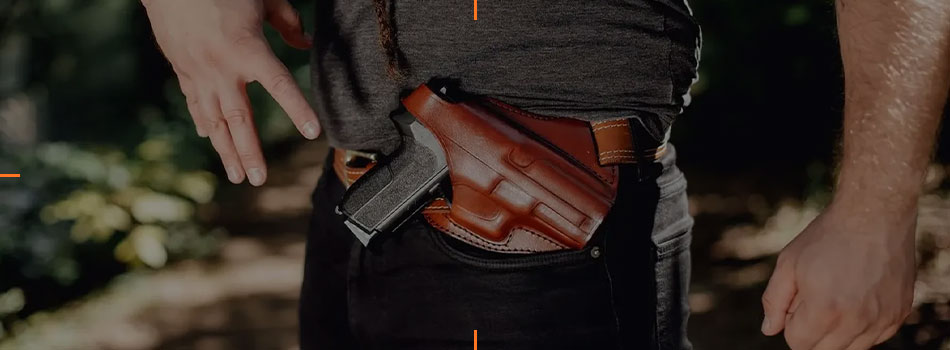
Advantages of Cross Draw Holsters
Cross draw holsters provide easier seated access, compatibility with longer firearms and reduced dependence on rearward dominant-arm movement.
The position can also remain comfortable during extended sitting and can work under heavy outer clothing where other belt positions become difficult to reach.
For users asking what the advantages of cross draw carry are, the main benefits are driving access, seated comfort, long-barrel compatibility and accessibility for some users with limited shoulder mobility.
In practical terms, its main advantages are:
- Easier access while driving or sitting.
- Better accommodation of long-barrel revolvers.
- Useful access beneath heavy winter layers.
- Less dominant-side shoulder extension than some strong-side positions.
- Comfortable positioning for users who spend long periods seated.
Drawbacks of Cross Draw Holsters
Cross draw holsters have meaningful drawbacks involving muzzle direction, concealment, speed and firearm retention.
The access path crosses the torso and can direct the muzzle across the body or toward people standing on the support side if handled poorly. This characteristic is one reason cross draw is restricted or prohibited at some ranges and in some competition formats.
For users asking what the disadvantages of cross draw carry are, the main concerns are the cross-body access path, forward-facing grip, generally slower access for most users and greater exposure of the handgun to someone standing directly in front.
In practical terms, the main drawbacks are:
- The access path can sweep across the body or cover nearby people on the support side.
- Some ranges and competition formats restrict or prohibit cross draw, so local range rules must be checked.
- The forward-pointing grip can print when a covering garment opens or moves.
- Access is generally slower than strong-side carry for most users.
- The grip is more accessible to a person standing in front of the wearer, creating a retention concern.
Cross Draw Holsters for Revolvers
Cross draw holsters pair well with revolvers because the position provides additional space for wide cylinders and longer barrels outside the waistband.
Short revolvers can use cross draw for seated accessibility, while longer models benefit more clearly because conventional IWB carry becomes increasingly restrictive. Model-specific revolver holsters should still match the exact frame and barrel configuration.
For users asking whether cross draw is good for revolvers, it is particularly relevant to medium, large and long-barreled revolvers such as configurations commonly found within the Colt Python holster category.
In practical terms, barrel length matters less to waistband clearance in cross draw than in IWB carry, but the holster must still support the exact revolver securely.
Concealing a Cross Draw Holster
A cross draw holster can be concealed, but its forward-facing grip makes concealment more demanding than many conventional IWB positions.
The grip can project beneath clothing or become exposed when a jacket or overshirt opens. Ride height, cant, firearm size and a sufficiently loose cover garment all affect printing.
For users asking whether cross draw works for concealed carry, it can work under suitable clothing, but concealed carry holsters in other positions may be easier to hide under light garments.
In practical terms, structured outer layers generally conceal cross draw more effectively than fitted shirts or lightweight open garments.
Cross Draw Draw Stroke and Safety Considerations
Cross draw requires greater attention to muzzle direction because the handgun travels across the body from the support side.
The cross-body access path can place the muzzle toward the wearer's body or people standing on the support side if firearm orientation is not controlled. Cross draw is therefore restricted at some shooting ranges and in some competition formats, and users should check the rules wherever they shoot.
For users asking whether cross draw carry is safe, it can be used safely with an appropriate holster and disciplined handling, but its access geometry creates concerns that are less pronounced with some strong-side positions.
In practical terms, range restrictions, muzzle direction and firearm retention should all be considered before adopting cross draw as a regular carry method.
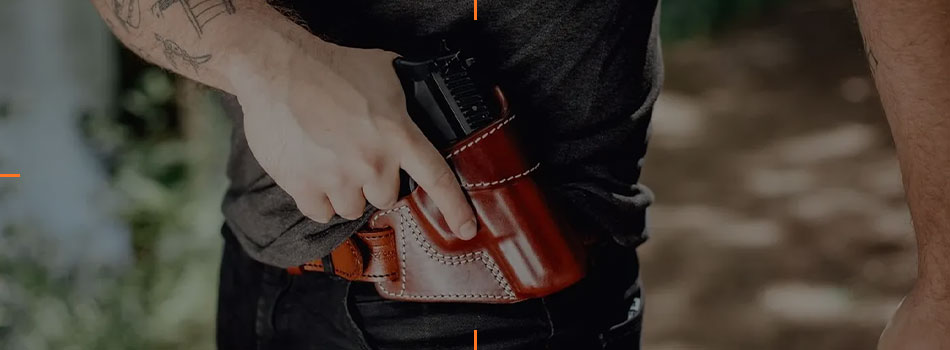
Cross Draw vs Strong Side and Shoulder Carry
Cross draw provides better seated access than many strong-side positions but generally loses to strong-side carry in concealment, access speed and retention geometry.
Traditional OWB holsters and IWB holsters keep the handgun on the dominant side, while shoulder holsters move firearm weight completely away from the waist.
For users asking whether cross draw is better than strong-side or shoulder carry, cross draw is strongest for seated belt access, strong-side carry is generally more versatile for everyday use, and shoulder carry can be preferable for very large handguns or prolonged seated wear.
In practical terms, cross draw occupies a middle ground between conventional waist carry and an upper-body harness rather than replacing either one universally.
How to Choose a Cross Draw Holster?
A cross draw holster should be selected according to firearm fit, cant, ride height, belt stability, material and retention.
A model-specific holster should support the handgun consistently while positioning the grip where it remains accessible without excessive projection from the body.
For users asking how to choose the best cross draw holster, the following factors provide a practical checklist.
In practical terms, each item should be confirmed before selecting the holster:
- Exact firearm fit: Match the exact handgun model, generation and barrel length.
- Cant angle: Choose an orientation that places the grip within comfortable support-side reach.
- Ride height: Balance seated access against concealment and barrel clearance.
- Belt position: Ensure the firearm does not interfere unnecessarily with sitting, clothing or other equipment.
- Belt rigidity: Use sufficient support to limit sagging and holster movement.
- Material: A leather cross draw holster can provide flexible body contact, while rigid materials provide different retention and maintenance characteristics.
- Retention: Select retention appropriate to the intended activity, especially where the grip is accessible from the front.
- Range compatibility: Check whether the intended shooting facility or competition permits cross draw use.
Cross Draw Holsters FAQ
A cross draw holster carries the handgun on the support side with the grip oriented for access by the dominant hand across the torso. It is commonly used when seated access or firearm length makes strong-side carry less convenient.
Cross draw holsters can be concealed beneath suitable outer clothing, but the forward-oriented grip can print more than many IWB positions. Jackets and loose structured garments generally work better than fitted or lightweight clothing.
Cross draw can be used safely with an appropriate holster and disciplined firearm handling, but its cross-body access path creates additional muzzle-direction concerns. Users should also consider retention and the position of nearby people before choosing this carry style.
Cross draw holsters can work well for driving because the handgun remains accessible without requiring a reach behind the strong-side hip. Vehicle layout, seat belts and individual body position still affect practical access.
A cross draw holster can be concealed when the firearm sits close to the body and an appropriate covering garment remains over it. The forward-facing grip can become more visible when clothing opens, bends or shifts.
Cross draw is generally slower than strong-side carry for most users because the hand must travel across the body to reach the firearm. Individual familiarity and holster positioning still influence practical access.
Some ranges and competition formats restrict or prohibit cross draw because the access path can direct the muzzle across adjacent areas or people. Shooters should check the rules of the specific range or competition before using a cross draw holster.
Cross draw holsters are particularly useful for medium, large and long-barreled revolvers because the angled position provides more space than many IWB configurations. The holster should still be made for the revolver's exact frame and barrel length.
Conclusion: Cross Draw Holsters Explained
A cross draw holster is a specialized support-side carry system that makes the most sense for driving, prolonged sitting, long-barrel revolvers and users who have difficulty reaching conventional strong-side positions.
Its advantages in seated access and firearm-length compatibility are balanced by harder concealment, generally slower access, retention concerns and a cross-body muzzle path that causes restrictions at some shooting facilities.
For users asking when cross draw is worth using, it is most appropriate when it solves a specific access or comfort problem that conventional strong-side carry does not.
In practical terms, model-specific cross draw holsters should be treated as a specialized carry option rather than a universal replacement for IWB, OWB or shoulder carry.